Free UK Shipping | Enquire for Worldwide

£160.00
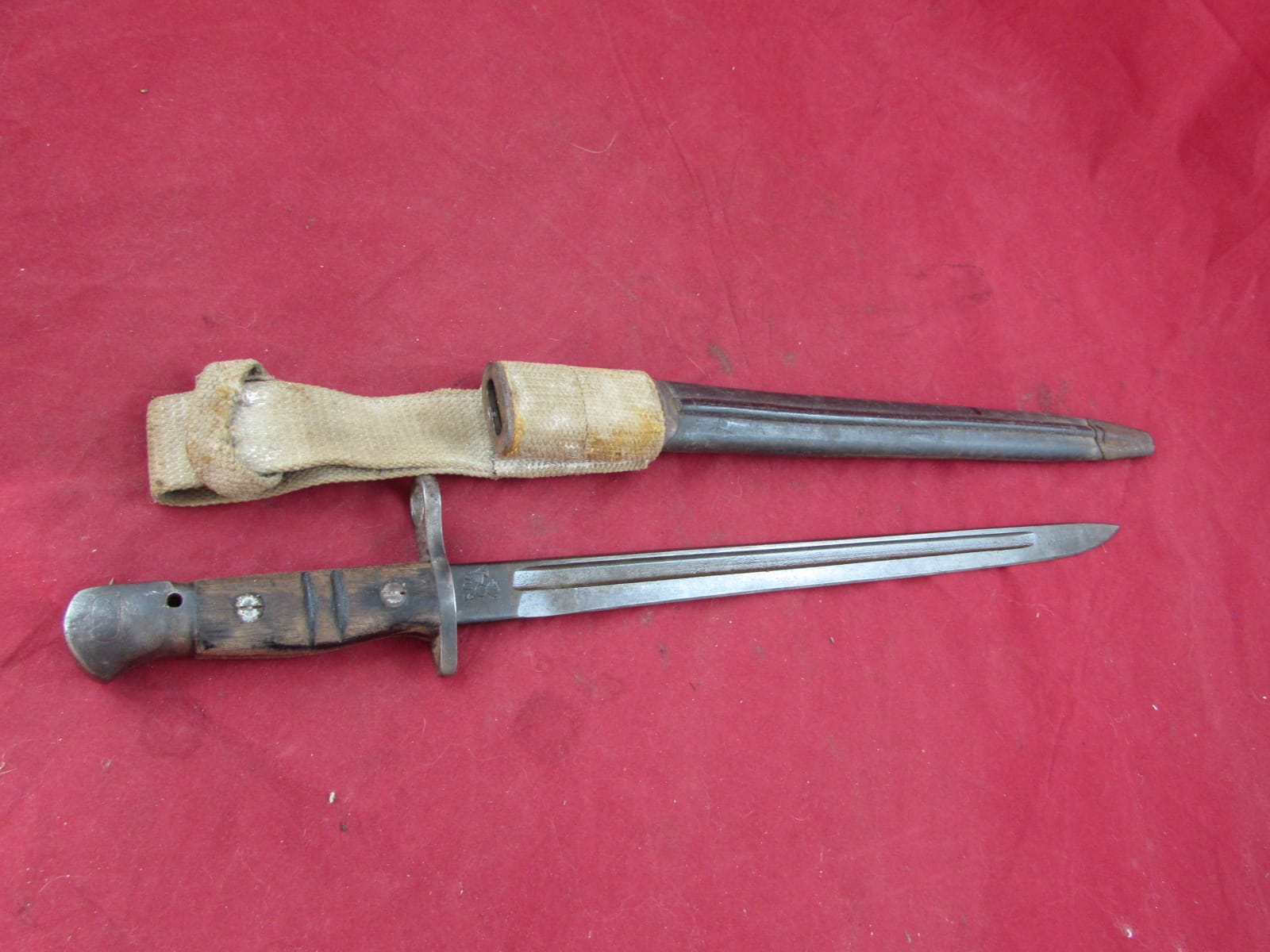
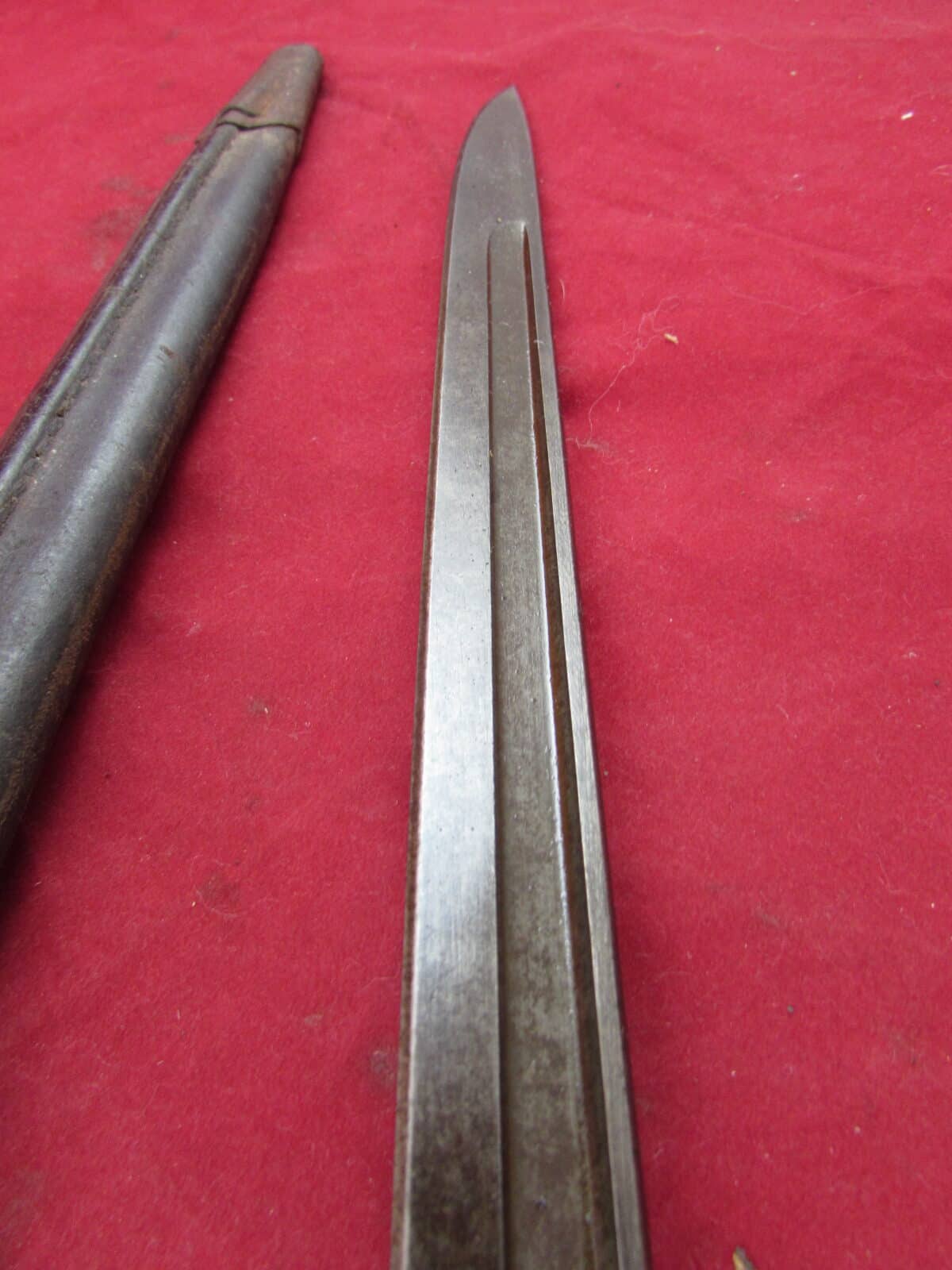
1917 US Bayonet, The *U.S. Model 1913 ‘1917’ Dated Remington Bayonet and Scabbard
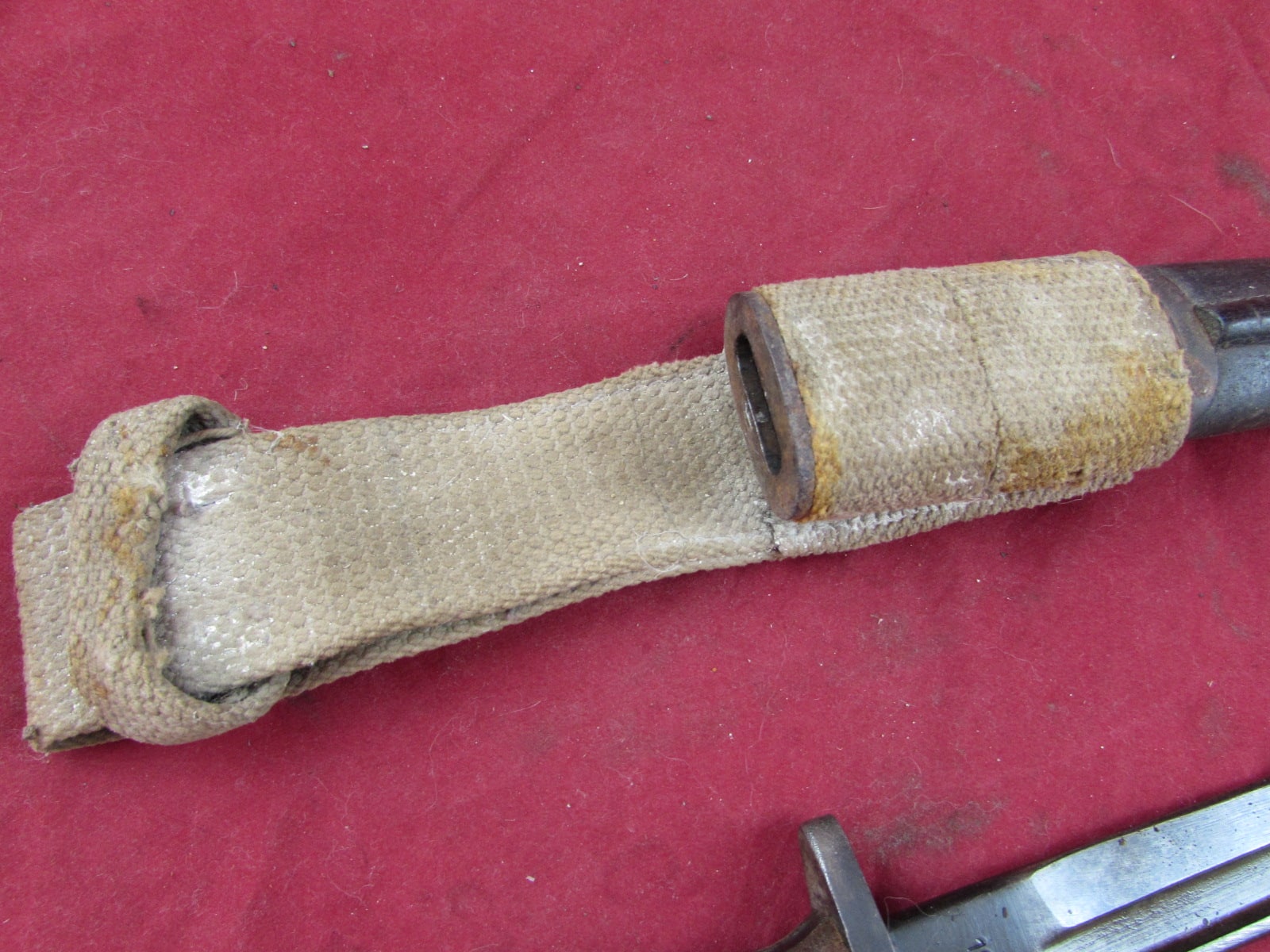
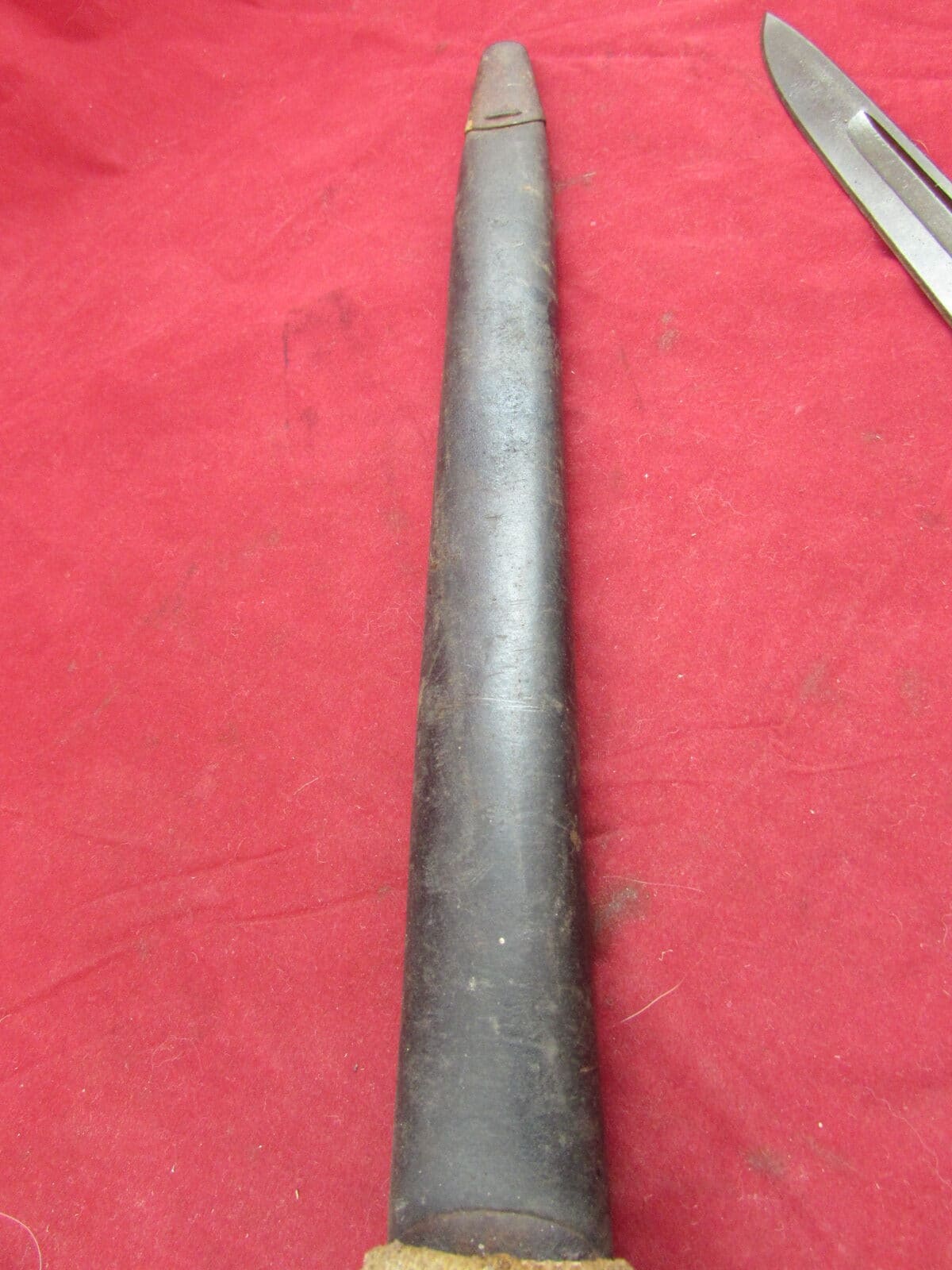
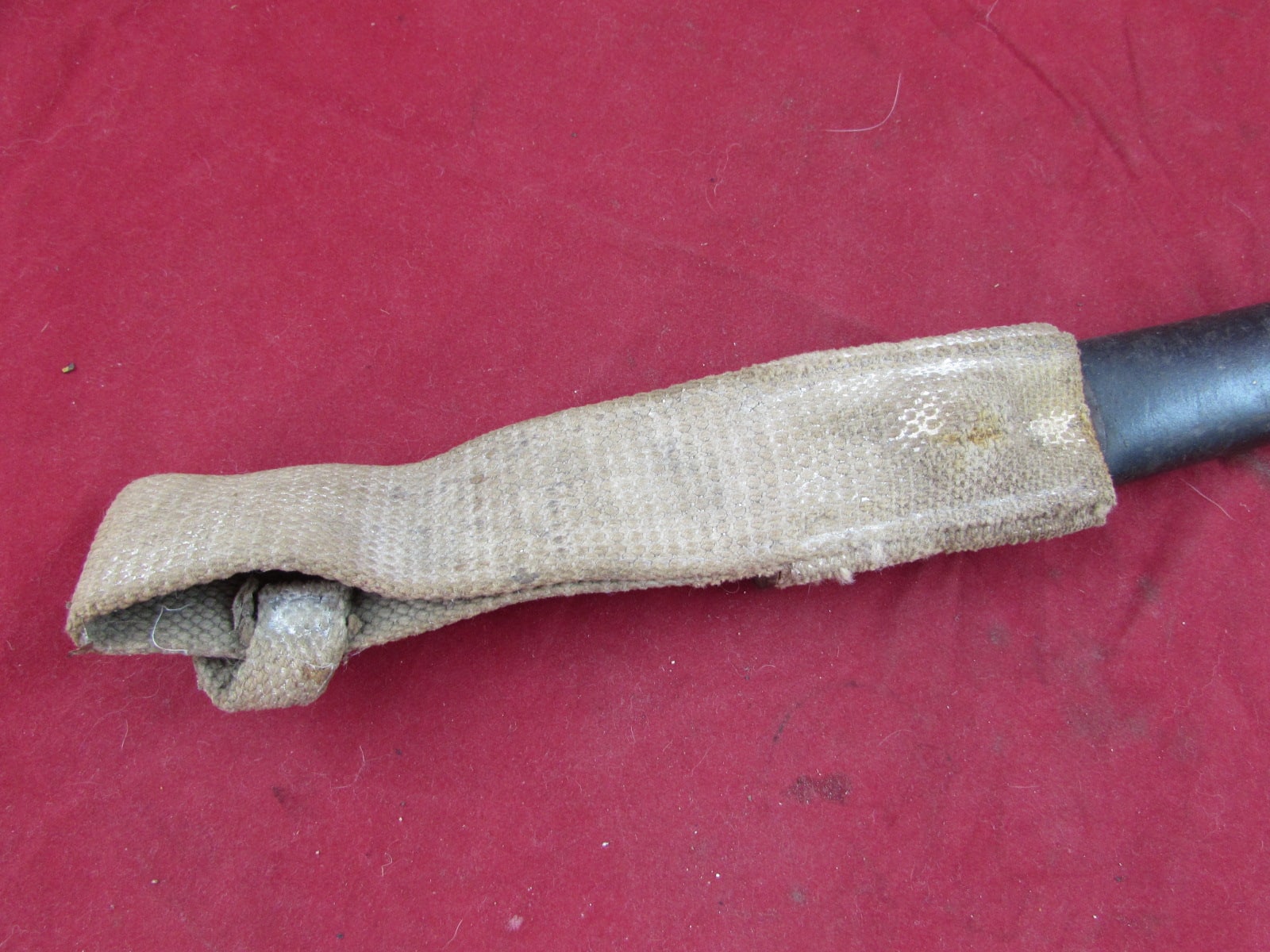
The American U.S. Model 1913 dated 1917 Bayonet in leather and steel scabbard with frog button mount . WW2 Home Guard used as has WW2 Webbing Frog. It has a nice blade with all it’s original patena finish.
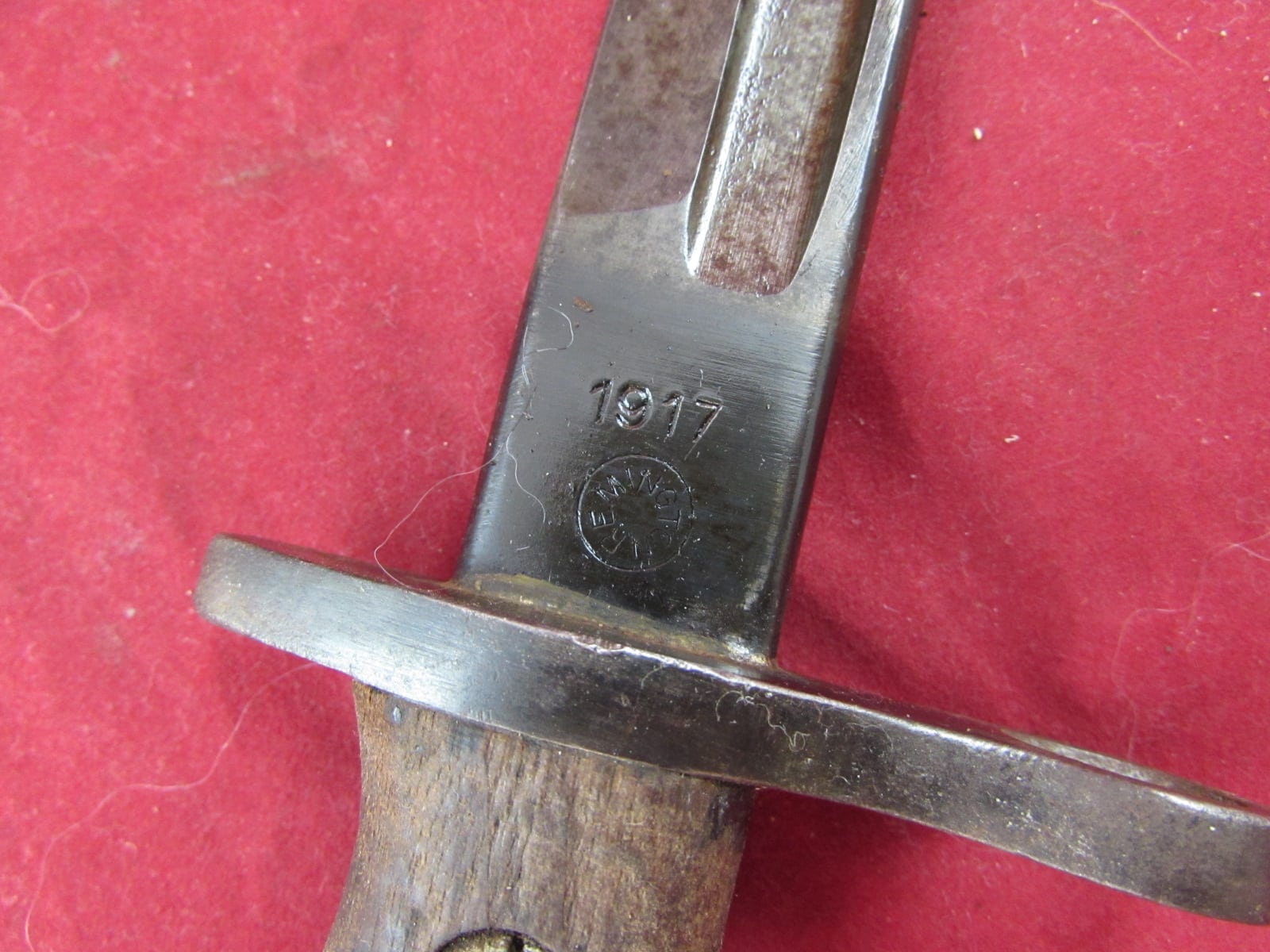
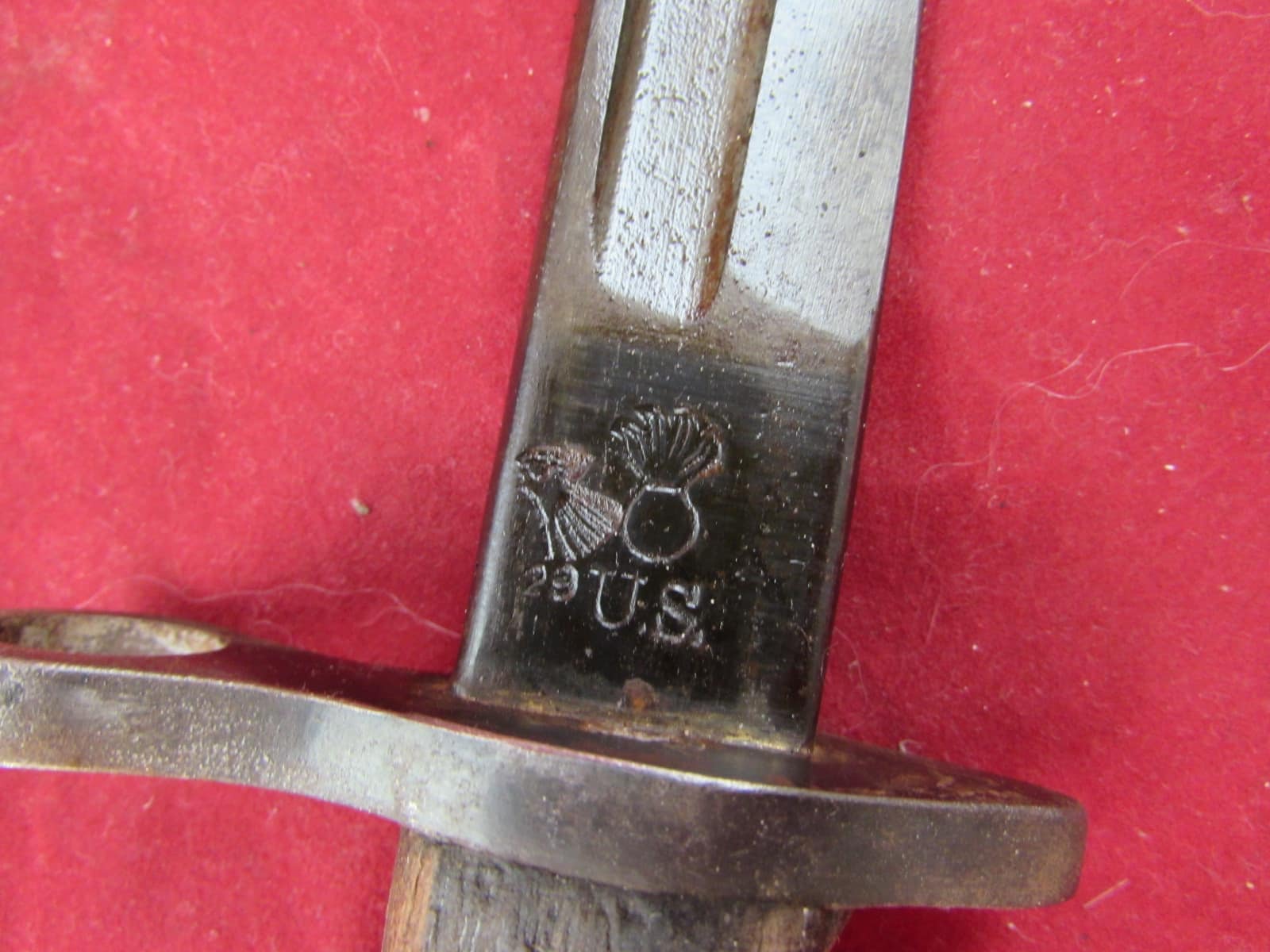
This 1913- 1917 pattern bayonet marked to the blade with 1917 over Remington in a circle on one side, and U.S. with the grenade and eagle head on the other. These bayonets were originally manufactured by the U.S. in WWI and acquired by the British in WWII for use mainly by the Home Guard. This one has been used in WW2.
The American U.S. Model 1913 dated 1917 Bayonet in leather and steel scabbard with frog button mount . WW2 Home Guard used as has WW2 Webbing Frog. It has a nice blade with all it’s original patena finish.
This 1913- 1917 pattern bayonet marked to the blade with 1917 over Remington in a circle on one side, and U.S. with the grenade and eagle head on the other. These bayonets were originally manufactured by the U.S. in WWI and acquired by the British in WWII for use mainly by the Home Guard. This one has been used in WW2.
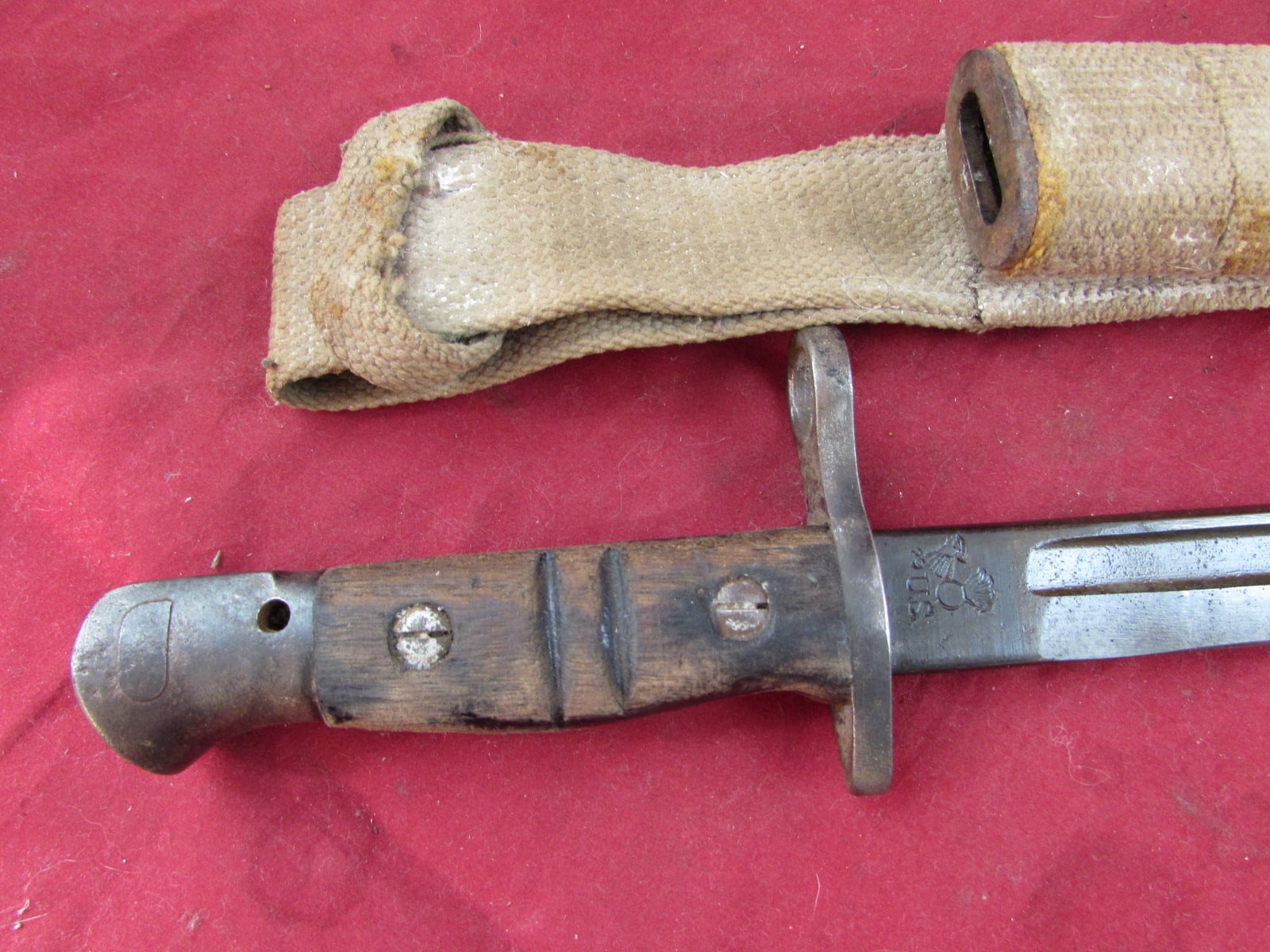
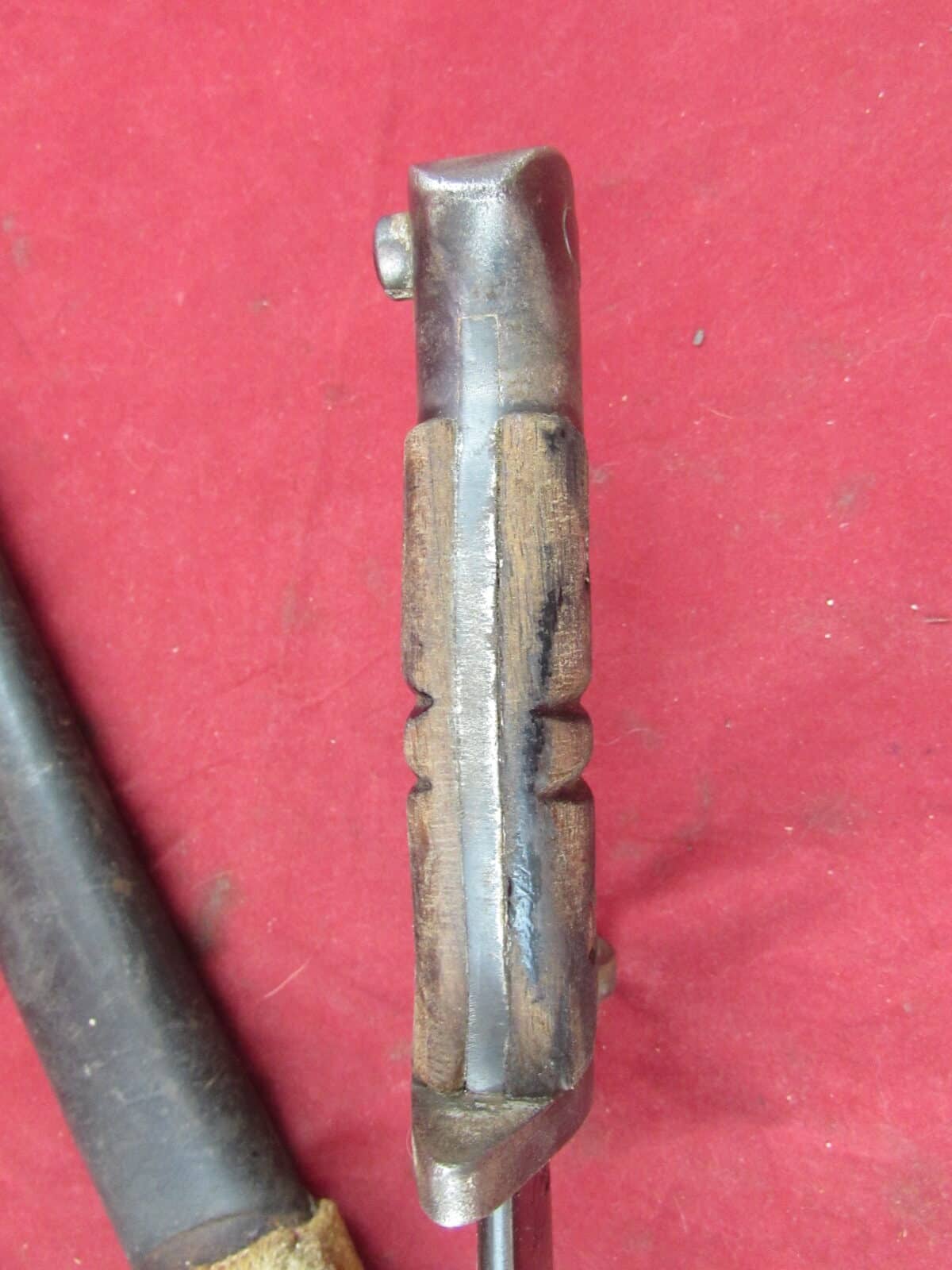
Pattern 1913/17. In good order with frog mount. Made by Remington. The pattern of bayonet that was continually used in WW2 by the British Home Guard. With twin cuts in the wood grip added to differentiate for British forces that it was the American bayonet and not a British 1907 Wilkinson.
Originally the bayonet design was made for the British in September 1917 by Remington in the US as the 1913 Pattern intended to be issued with the P14 Rifle in .303 inch calibre. However, when America entered the war they changed production of the P14 rifle over to .30 inch calibre, at which point it became their M17 rifle. As the calibre change meant no alteration to the bayonet was required they basically took the unfinished/unshipped bayonets and made them American property by over-stamping the British marks with American marks, thus becoming M1917 bayonets.
The P14’s principal combat use during World War I was as a sniper rifle, since it was found to be more accurate than the Short Magazine Lee–Enfield, either in standard issue form or with modified “fine-adjustment” aperture rear sights designated Pattern 1914 Mk I W (F) and Pattern 1914 Mk I* W (F) or, from April 1918, Aldis Pattern 1918 telescopic sights designated Pattern 1914 Mk I* W (T) (modified and telescopic sights were mainly used on Winchester-manufactured rifles, the Winchesters being thought to be of superior quality). During WW2 the rifle was also used again as a sniper rifle, the configuration being different from the World War I incarnation.
2 notches can be seen on the wooden handle as to distinguish it from SMLE bayonets as both rifles and blades were, though very similar incompatible with the other.


Ephemera & Photographs, World War I


World War I


Featured Items, R F C & R A F, World War I


Ephemera & Photographs, World War I