Free UK Shipping | Enquire for Worldwide

£2,500.00
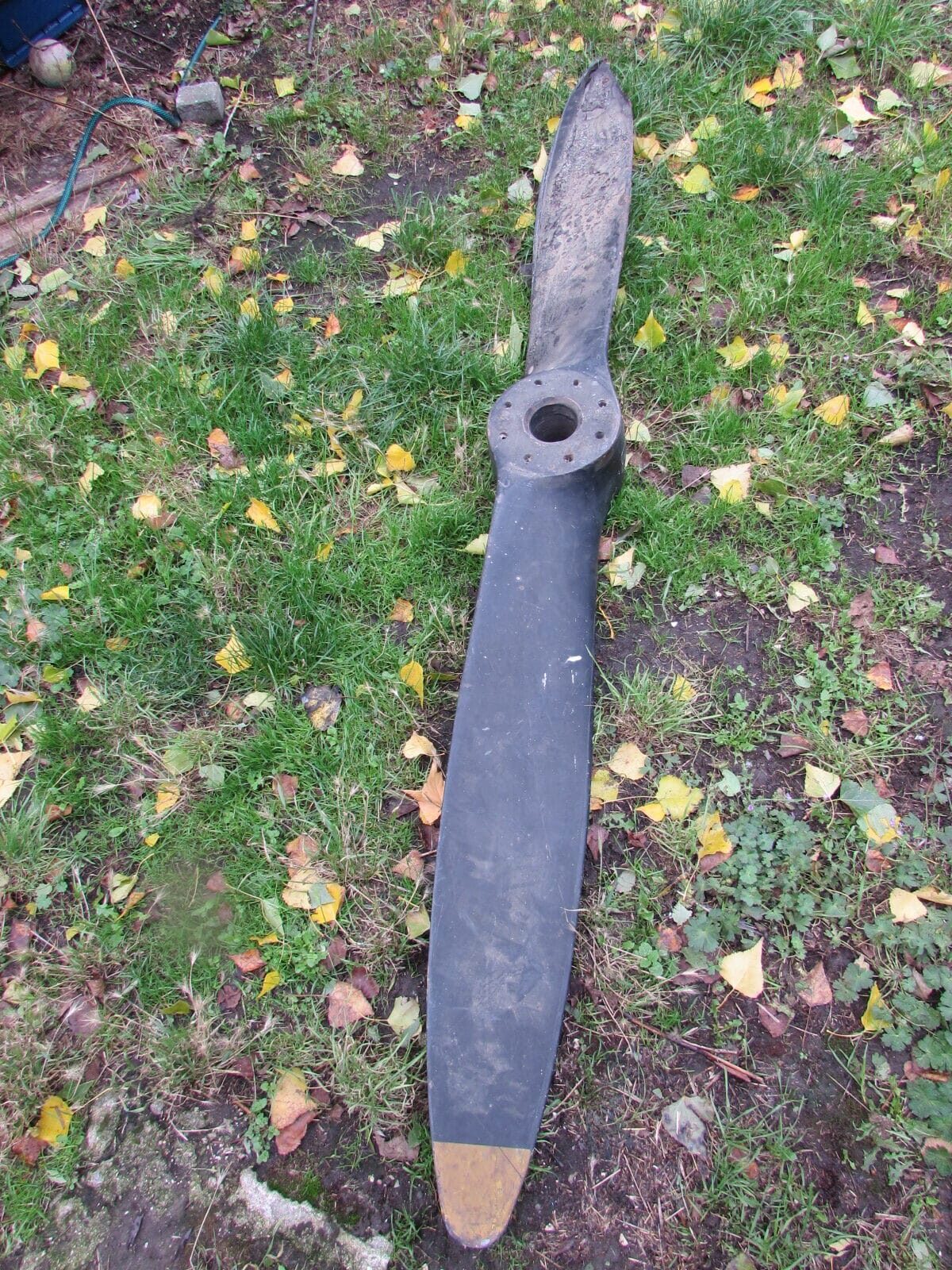
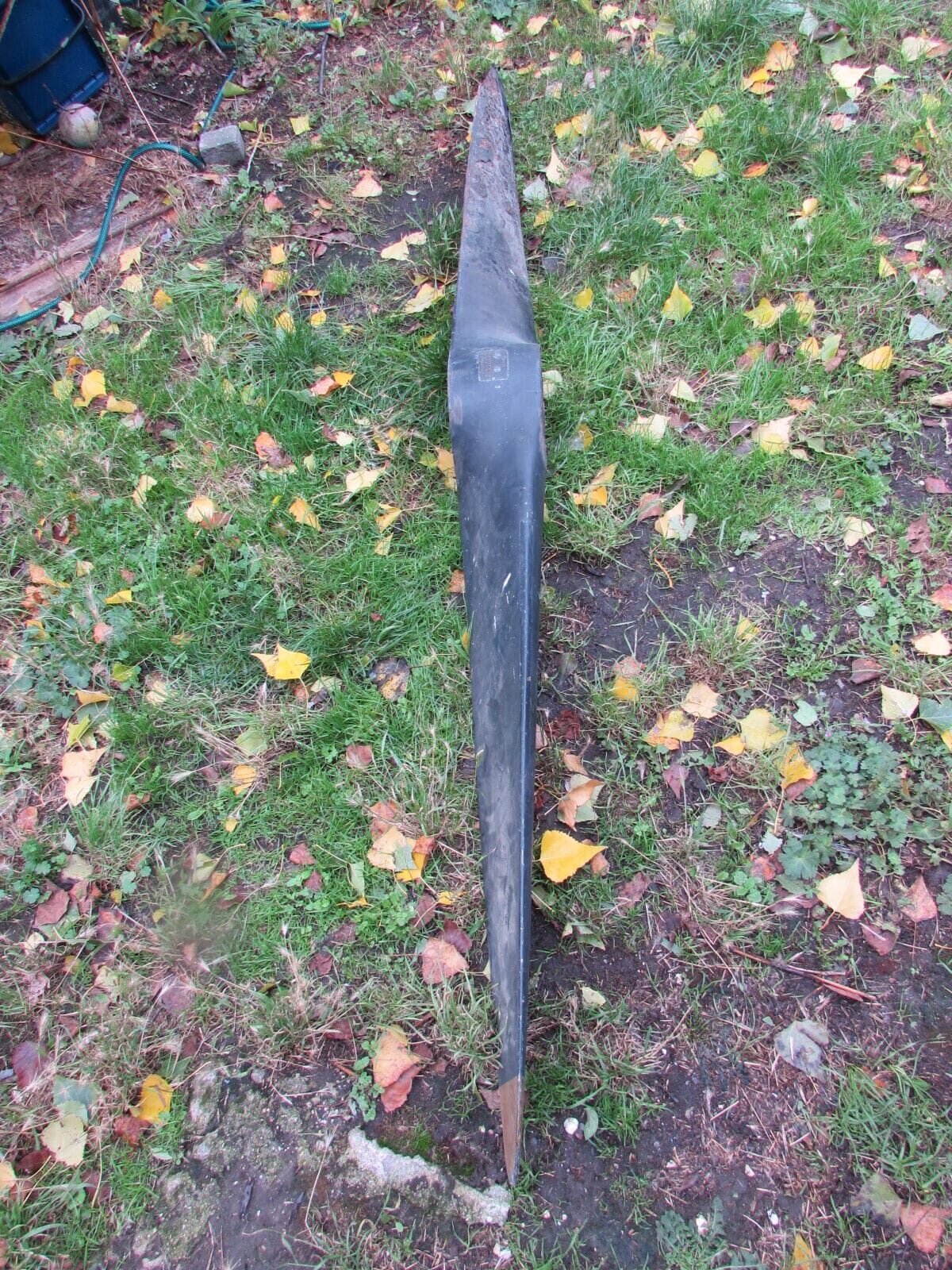
WW1 Airco DH.6 Propeller B3192 – 90 Inch Blade – Burnt End – Original Brass Boss Plate – RAF Museum Letter, 1918
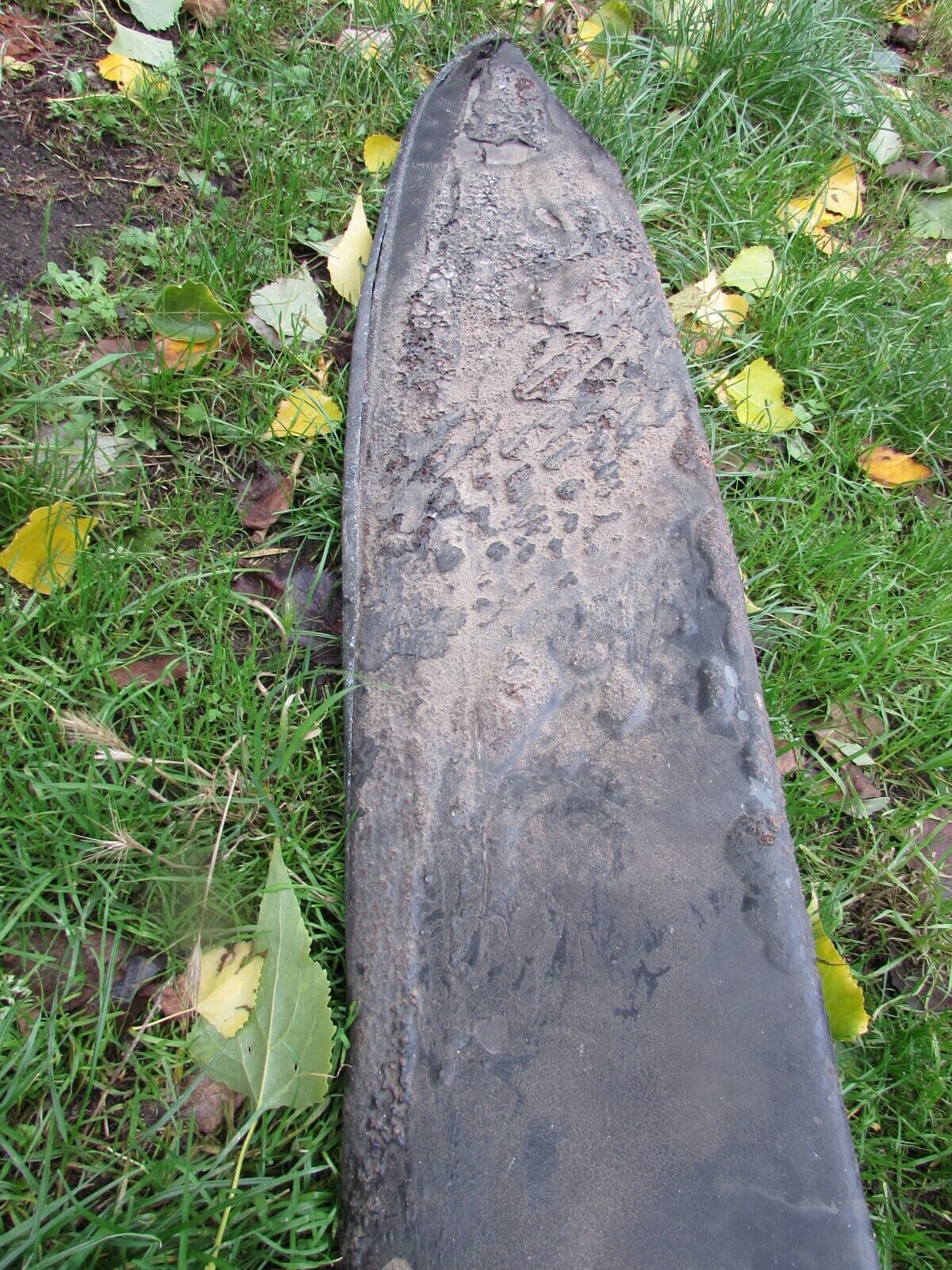
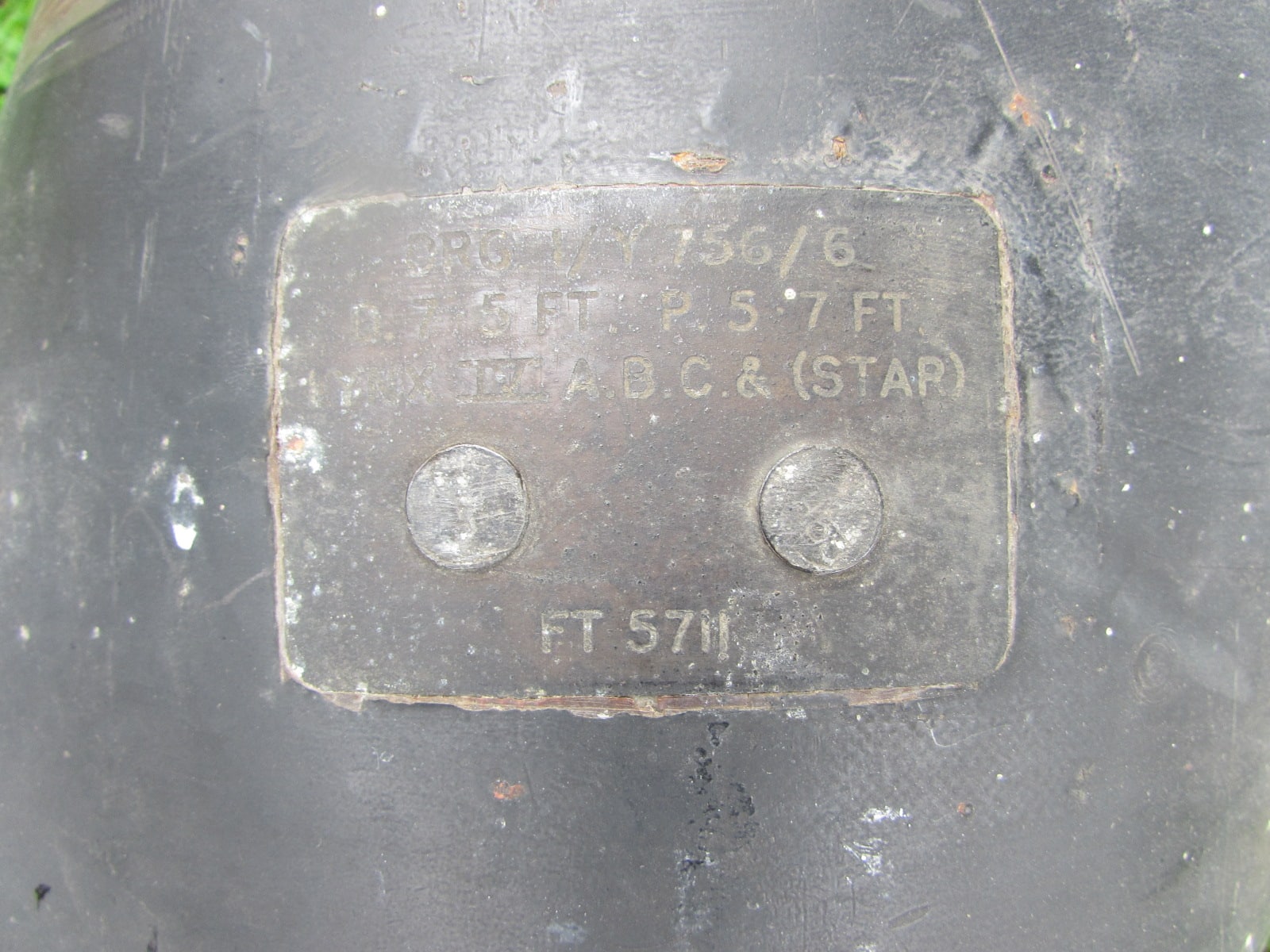
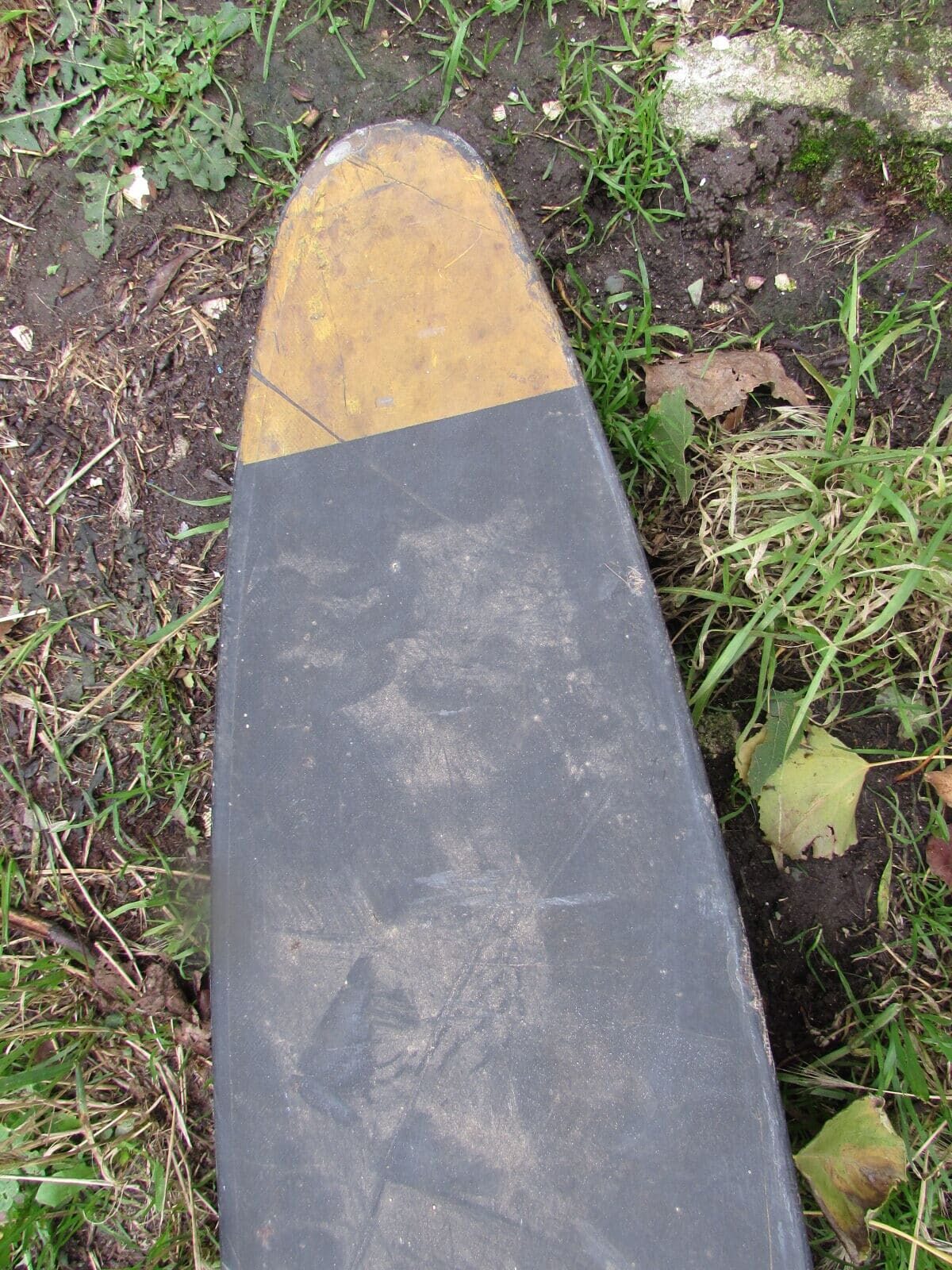
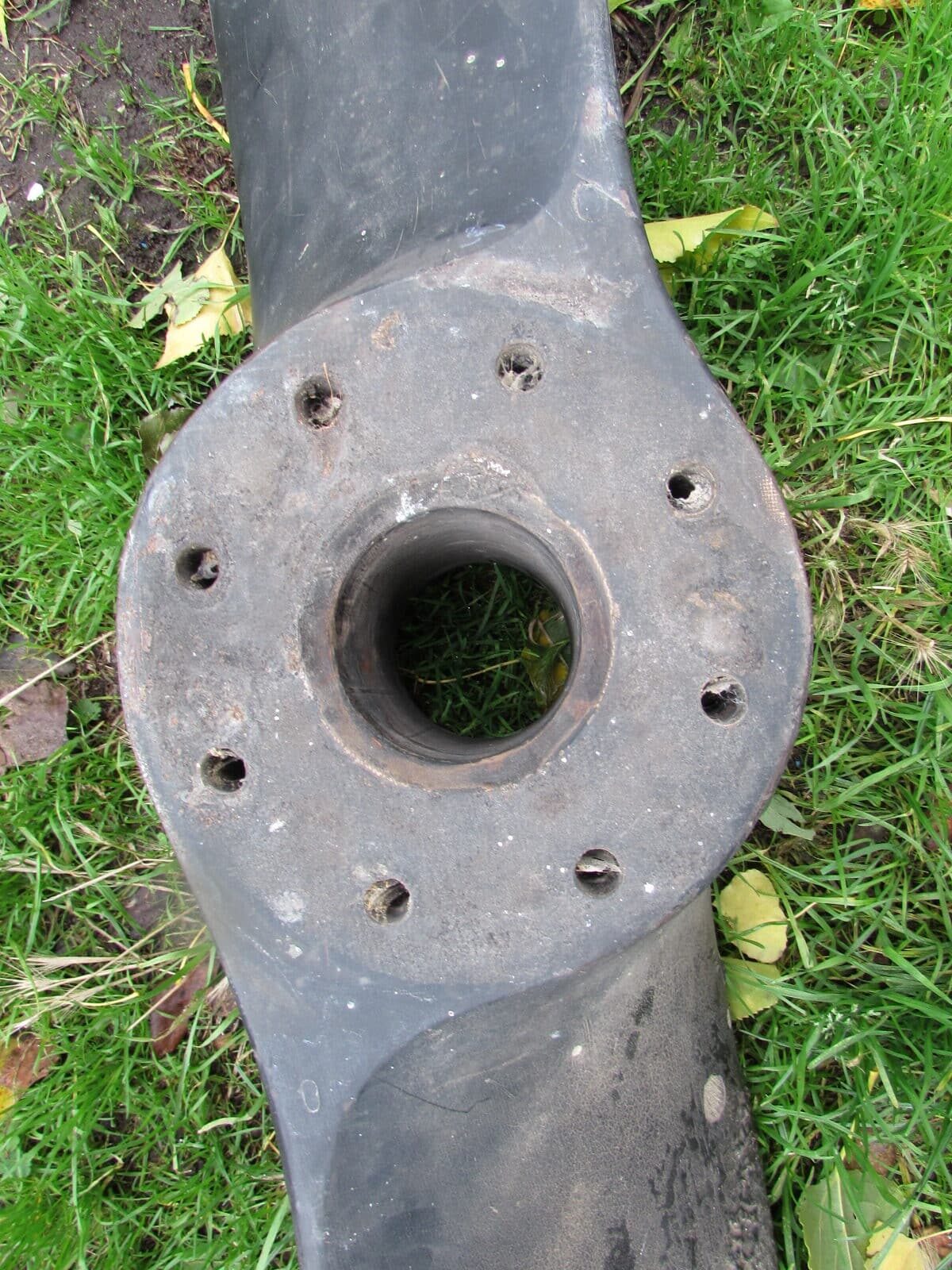
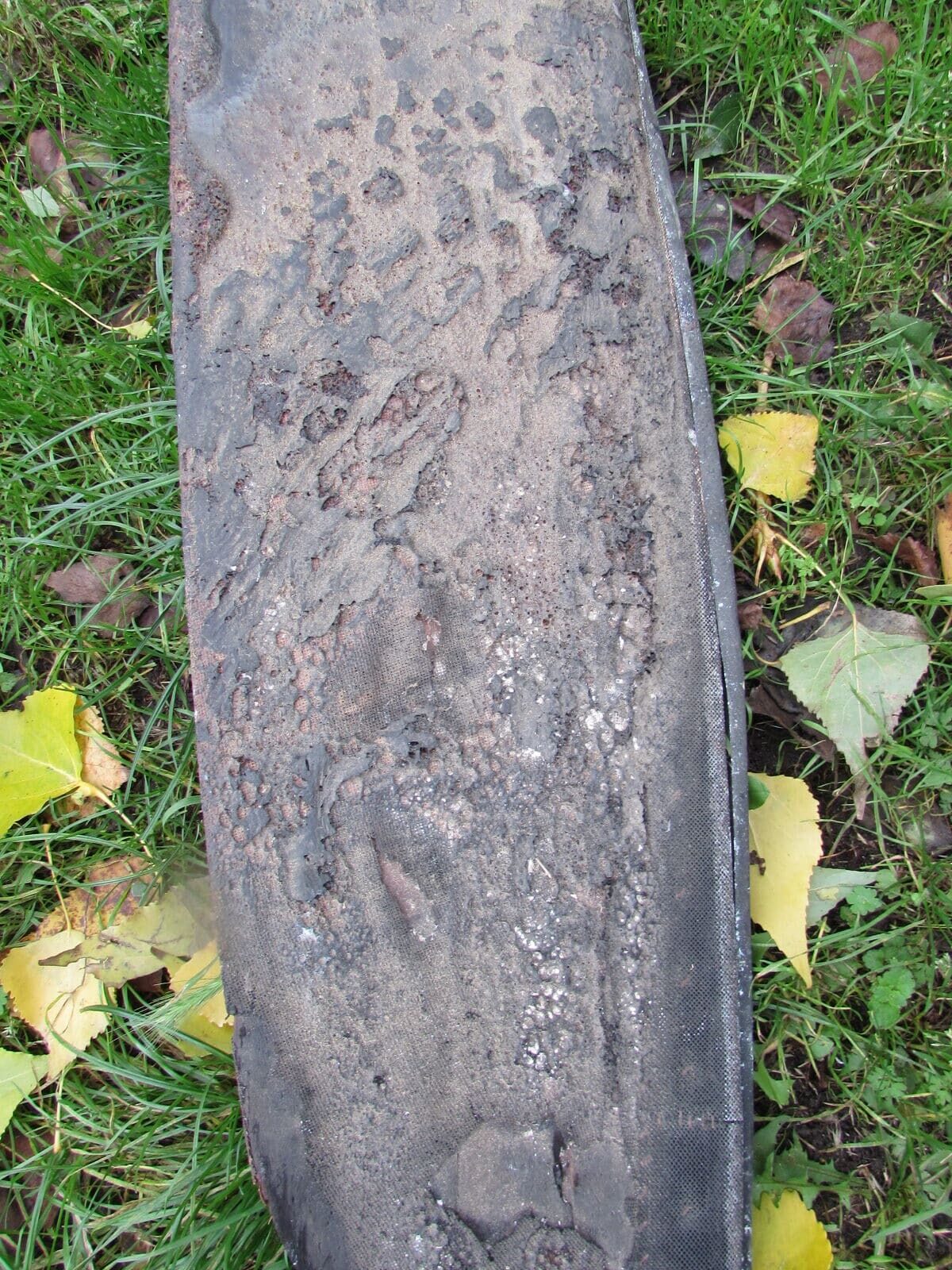
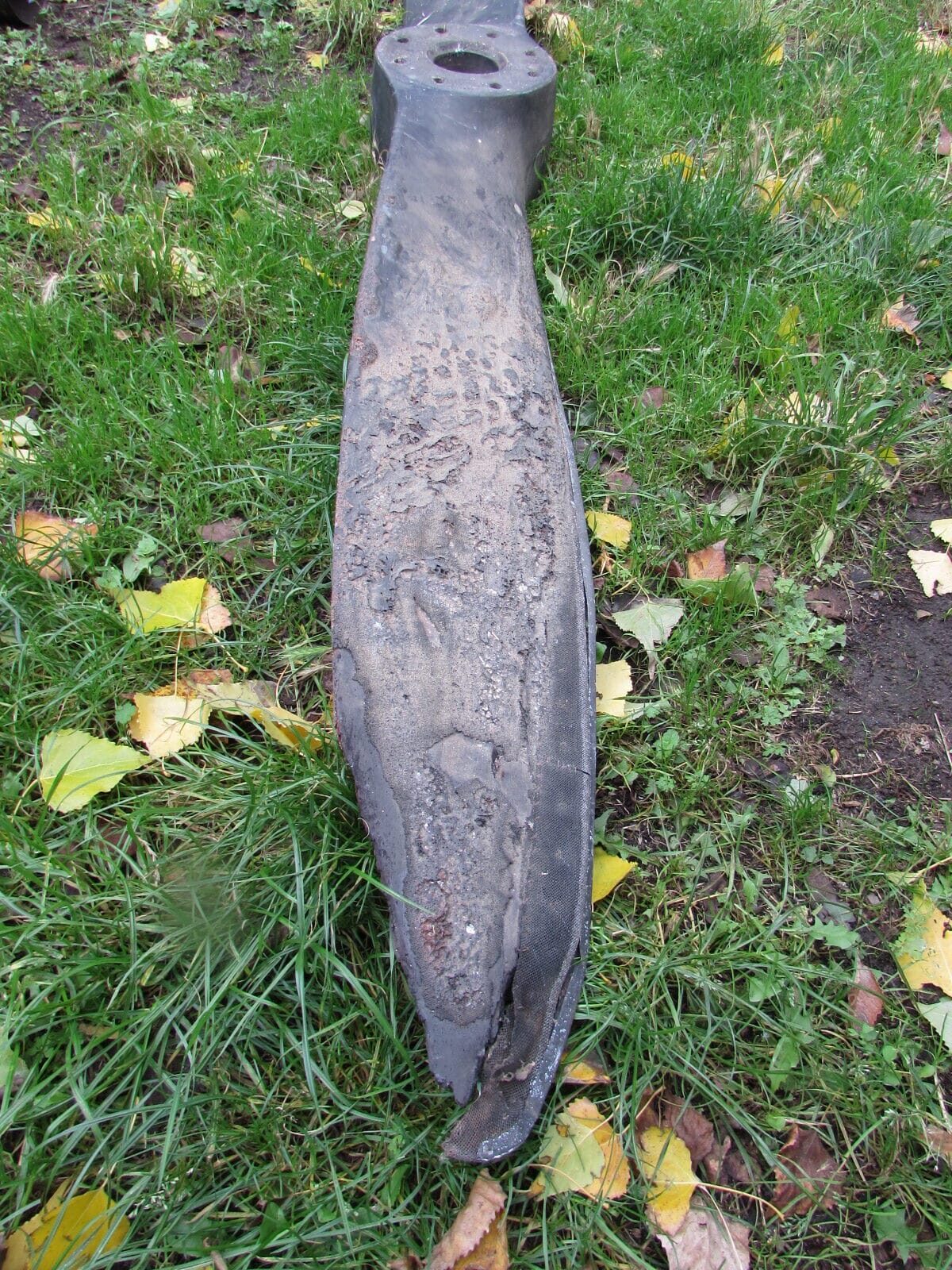
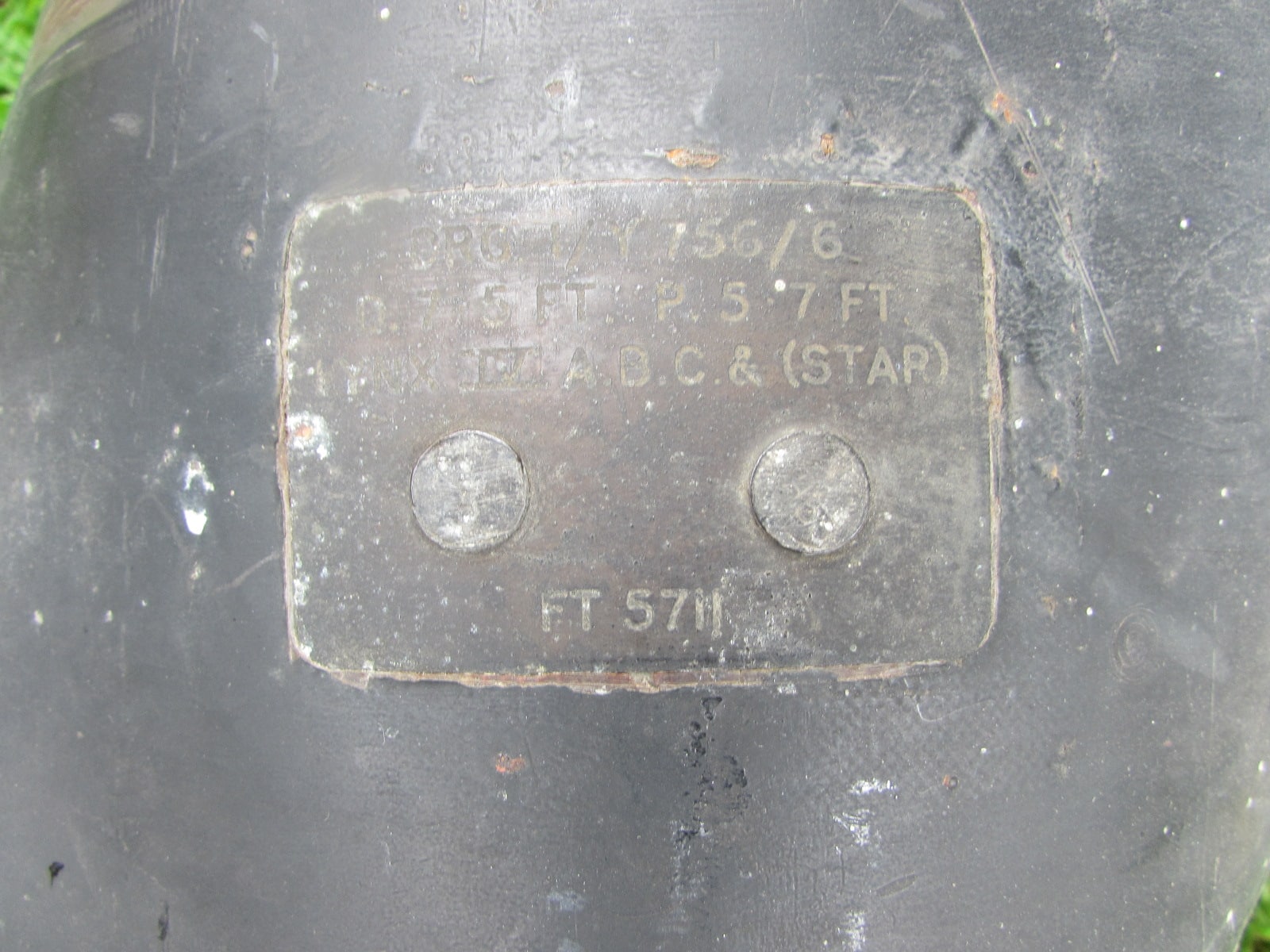
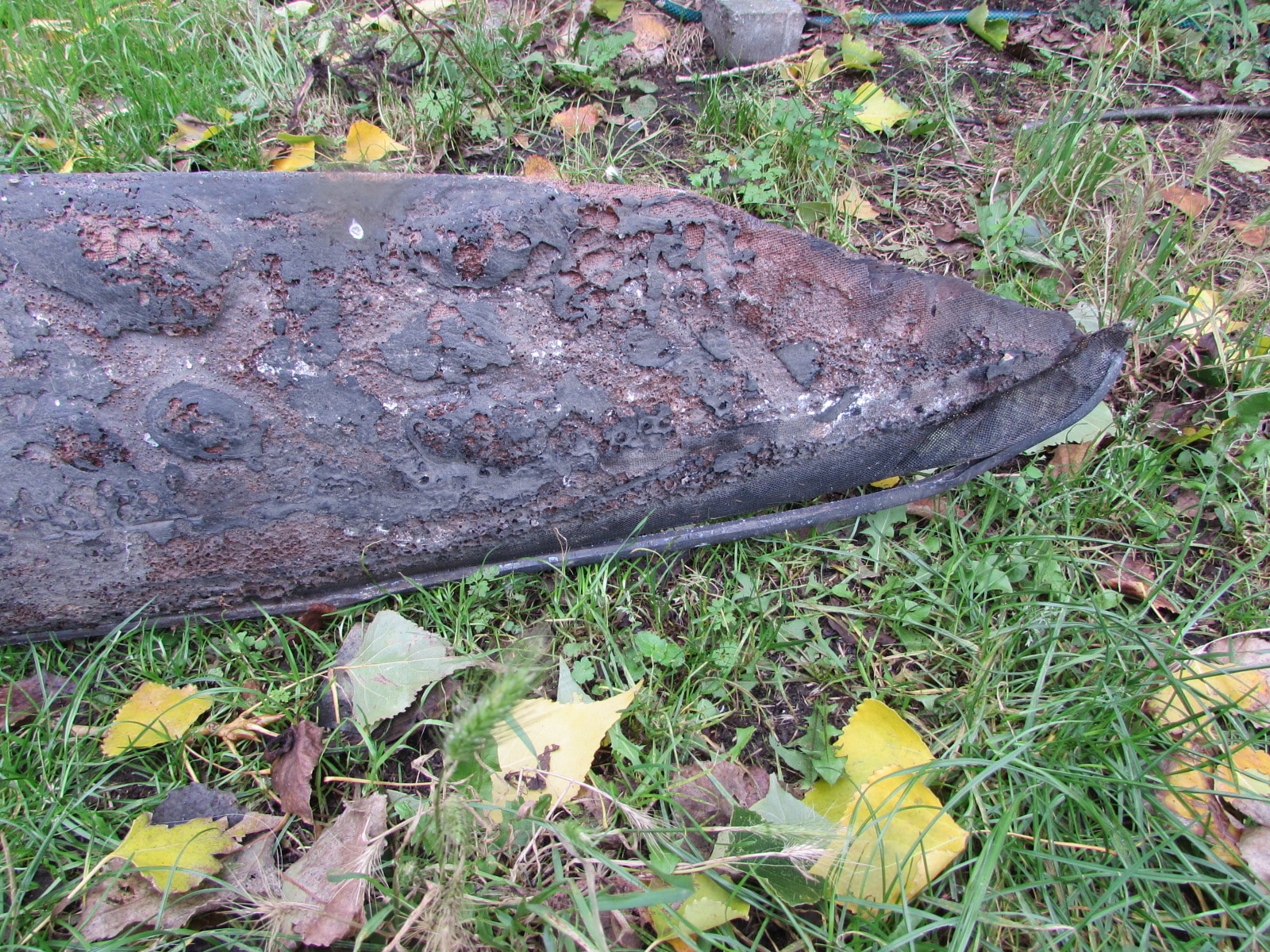
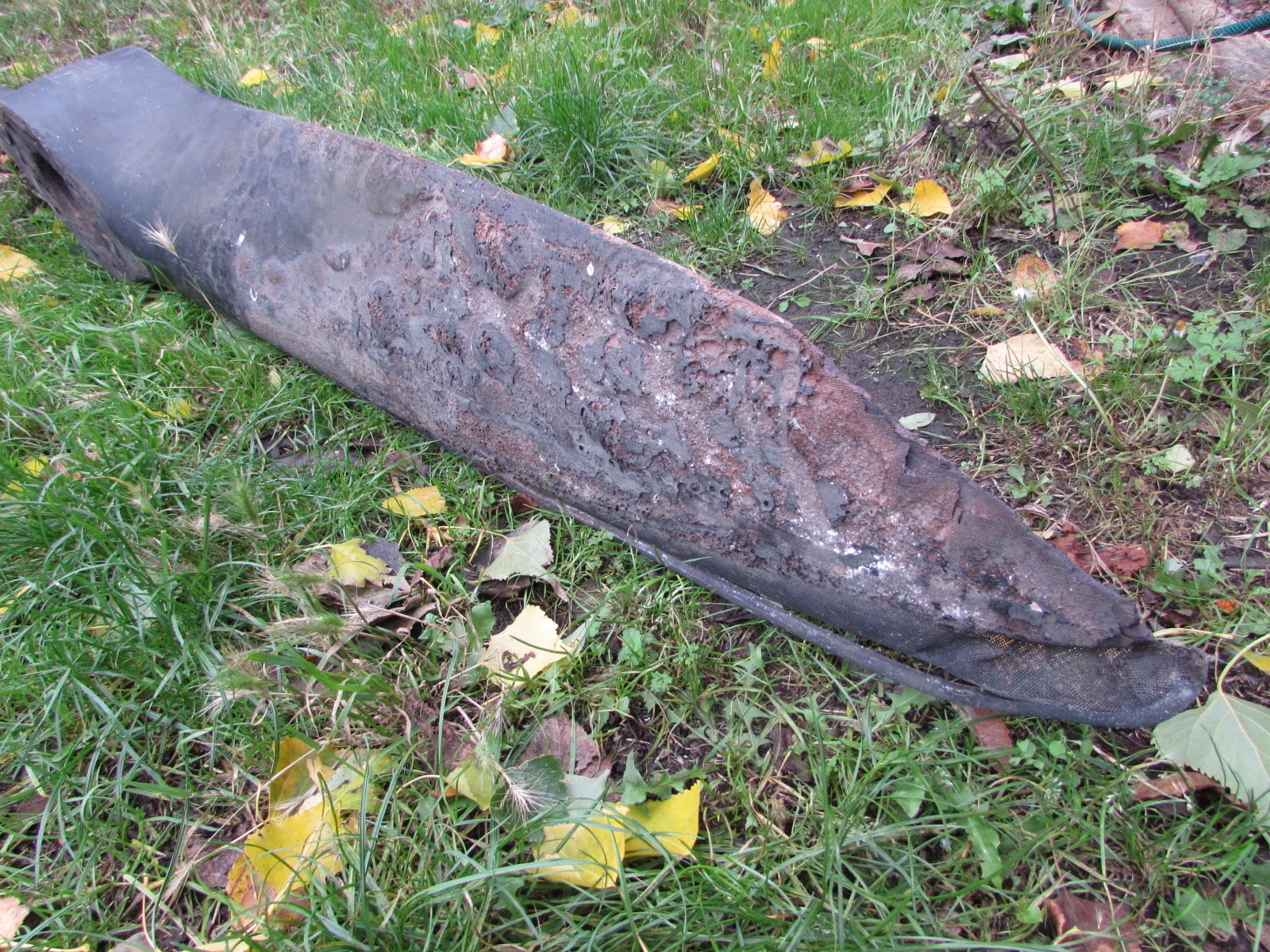
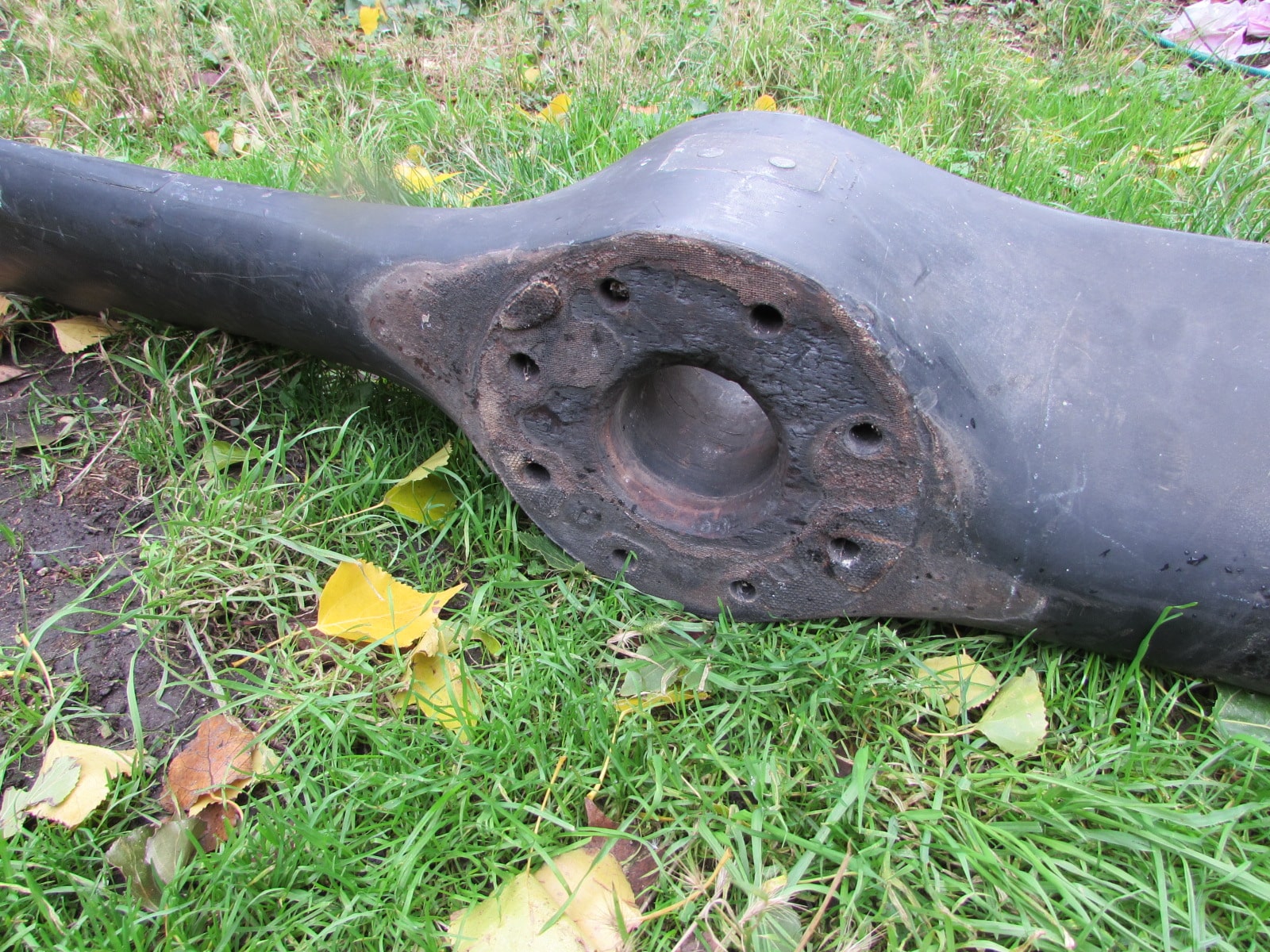
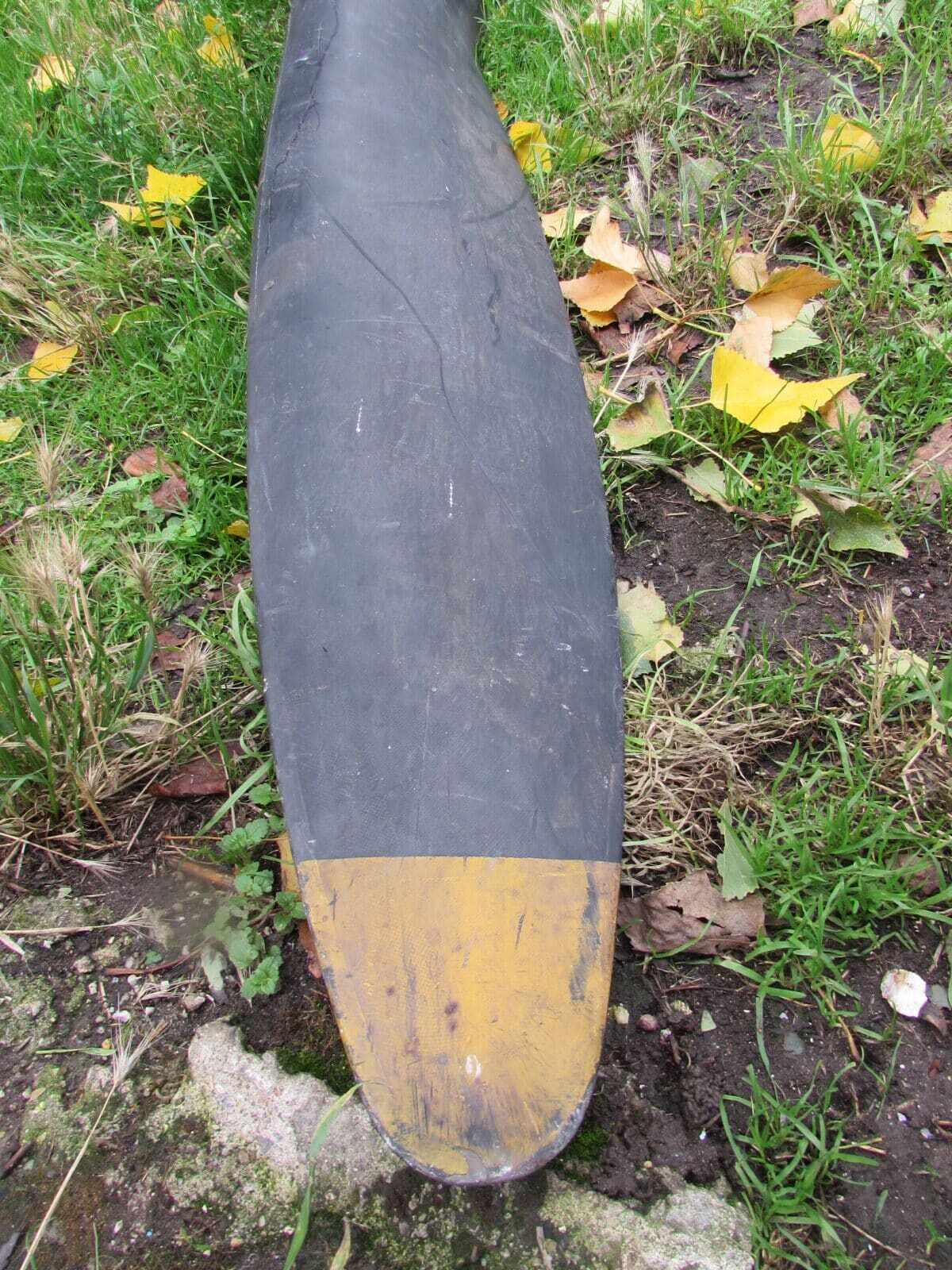
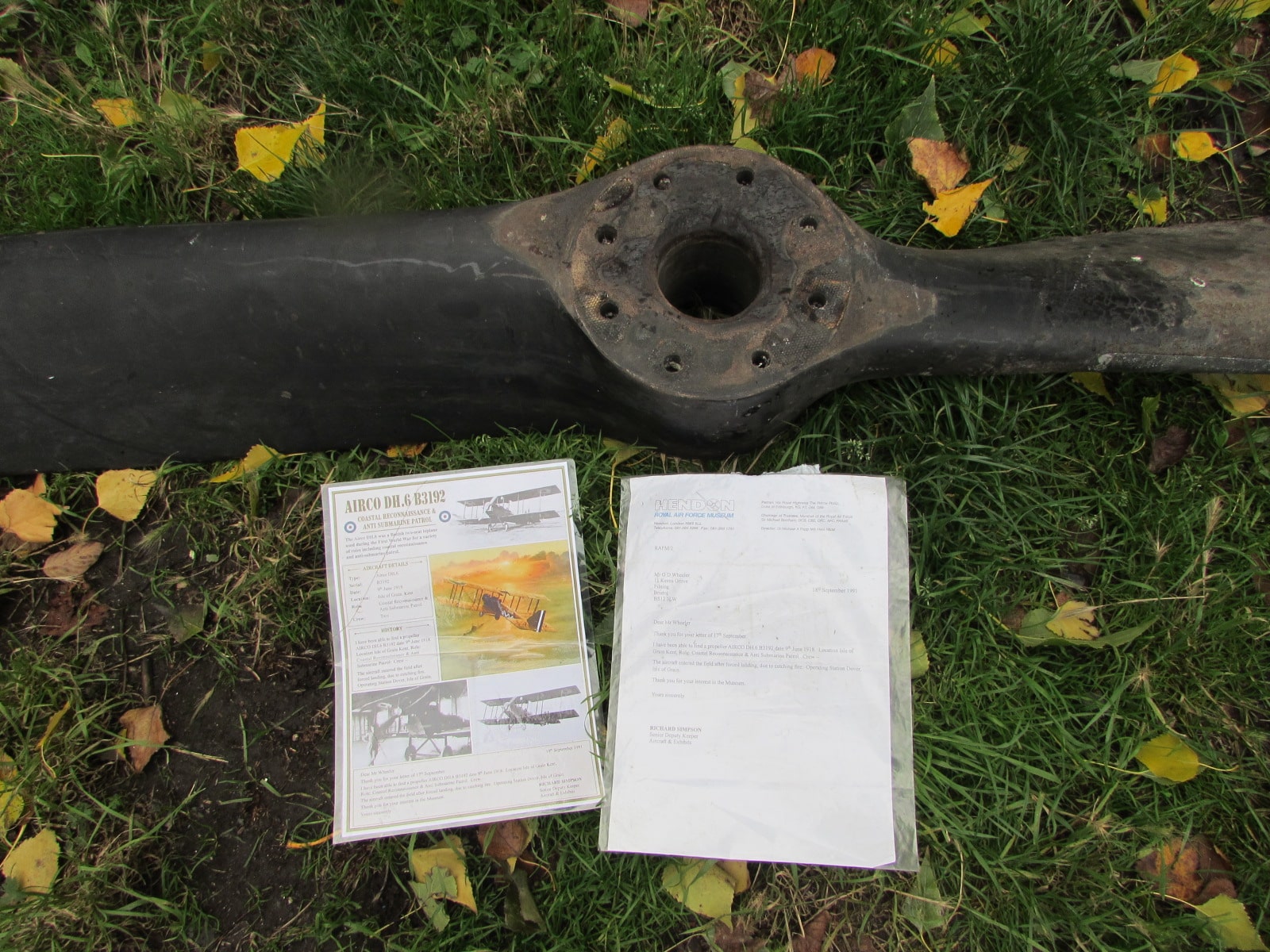
The propeller retains its original brass identification plate to the centre boss and displays a distinctive area of burning to one end of the blade. This visible feature is particularly interesting in light of the surviving historical documentation, which records that the aircraft entered a field following a forced landing caused by the aircraft catching fire.
WW1 Airco DH.6 Aircraft Propeller B3192 – 89-90 Inches – Isle of Grain, Kent, 1918 – Original RAF Museum Letter
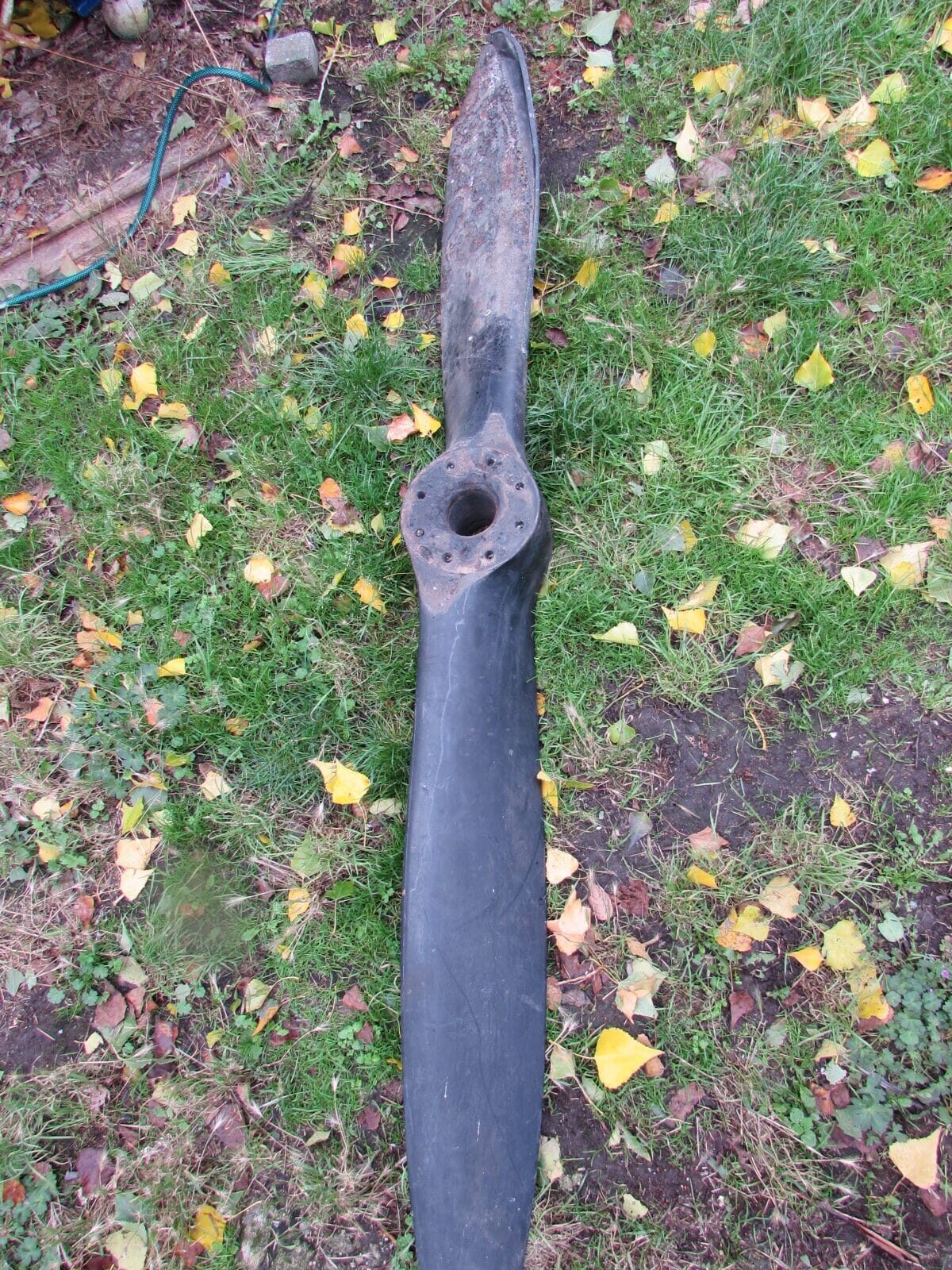
A fascinating piece of First World War aviation history: an original 89-90-inch ish, aircraft propeller associated with the British Airco DH.6, serial number B3192, an aircraft recorded as having made a forced landing on the Isle of Grain, Kent, on 9th June 1918 after catching fire.
The propeller retains its original brass identification plate to the centre boss and displays a distinctive area of burning to one end of the blade. This visible feature is particularly interesting in light of the surviving historical documentation, which records that the aircraft entered a field following a forced landing caused by the aircraft catching fire.
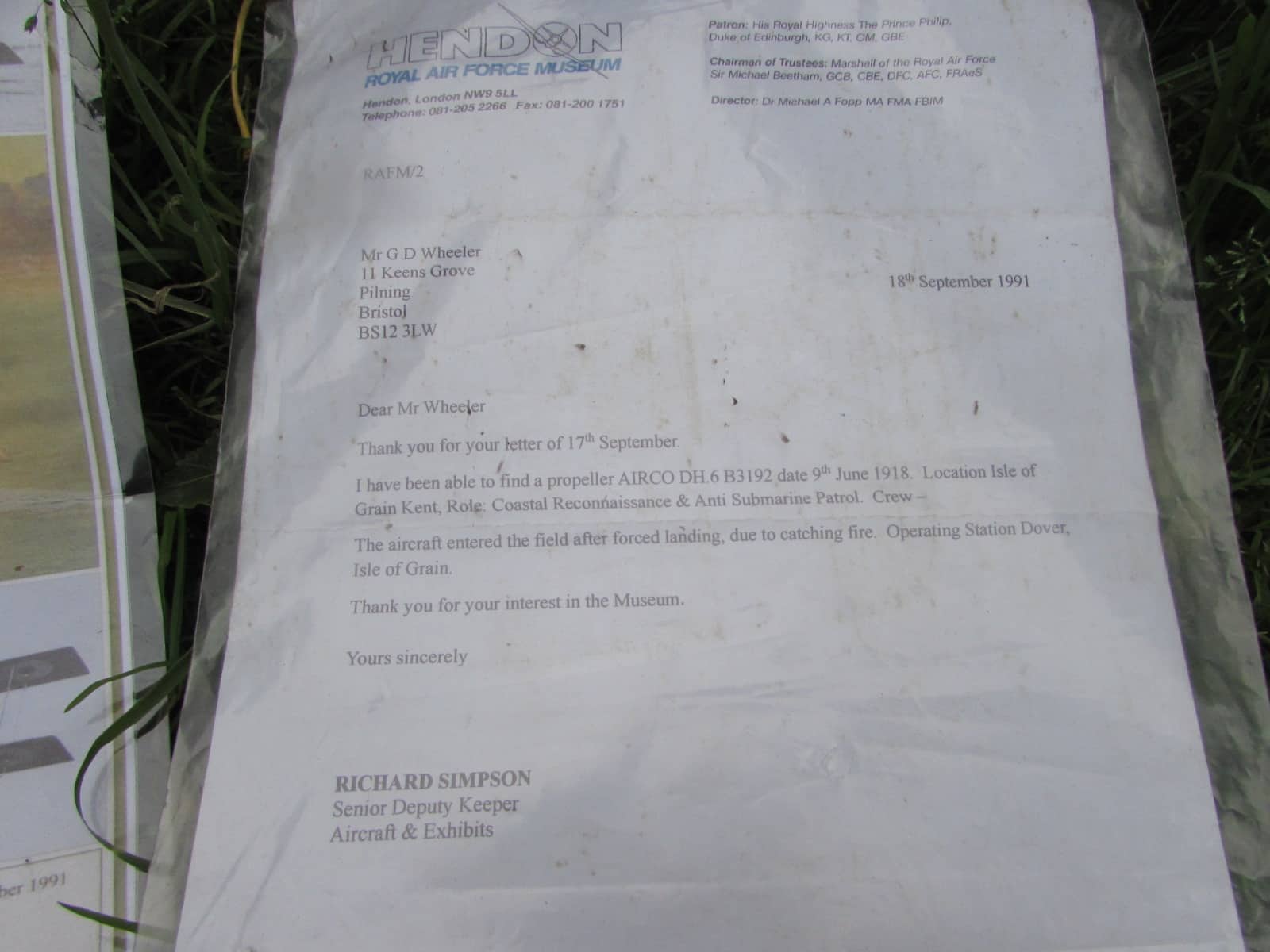
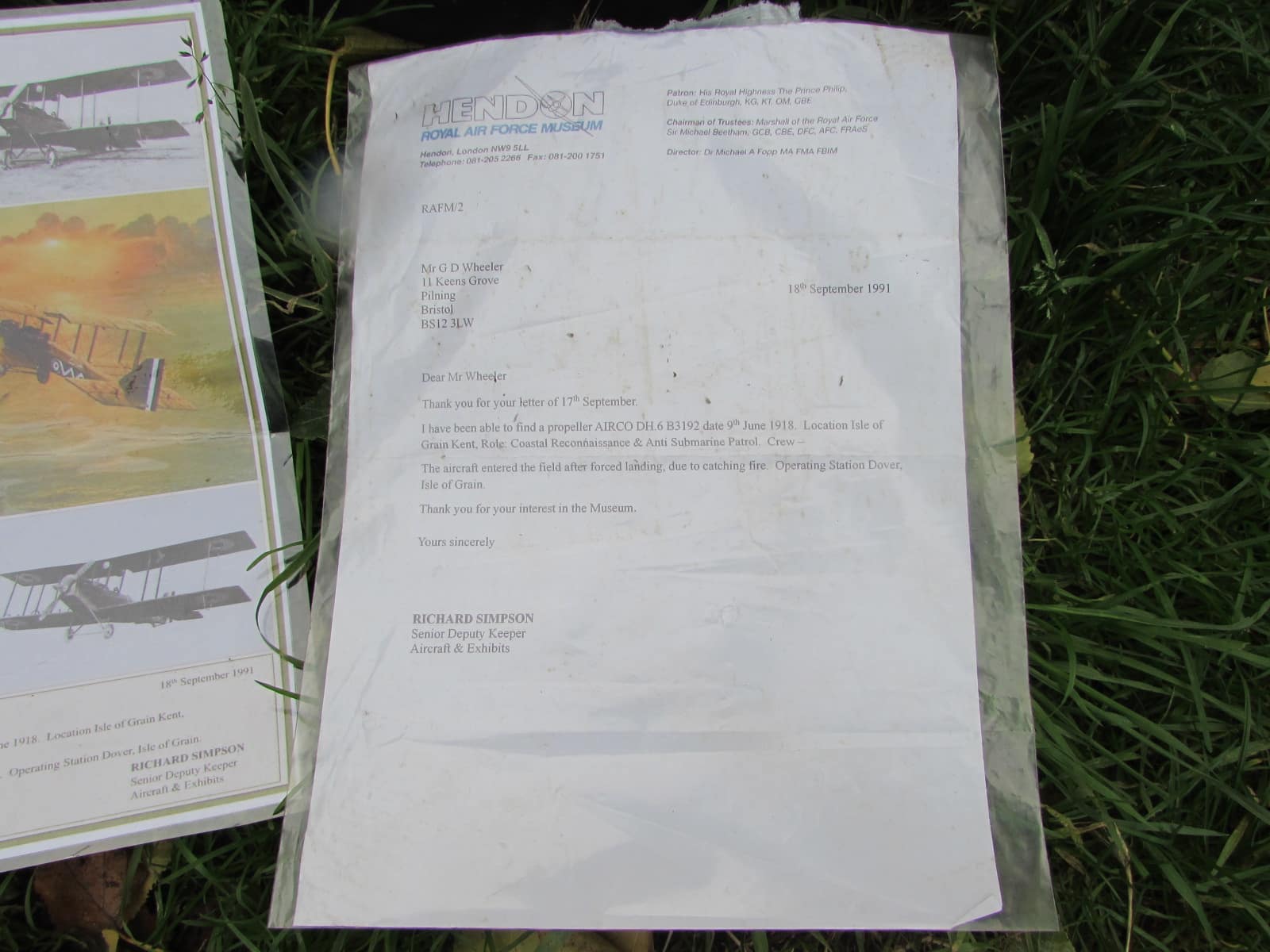
Accompanying the propeller is an original letter from the Royal Air Force Museum, Hendon, dated 18th September 1991. Signed by Richard Simpson, Senior Deputy Keeper, Aircraft & Exhibits, this correspondence provides an important historical reference linking the propeller to Airco DH.6 B3192.
Historical Background – The Airco DH.6
Designed by Geoffrey de Havilland, the Airco DH.6 was a British two-seat biplane used extensively for training during the First World War. The type was also employed for coastal reconnaissance and anti-submarine patrol duties.
During 1918, German U-boats continued to threaten Allied merchant shipping around the British coast and in the English Channel. Aircraft operating from coastal stations helped search for surfaced submarines, observe maritime traffic and protect important shipping routes.
The DH.6’s role in these operations placed its crews in the challenging environment of maritime flying, often over open water and at relatively low altitude. Mechanical failures and engine fires could quickly turn a routine patrol into a life-threatening emergency.
Airco DH.6 B3192 – The Isle of Grain Incident
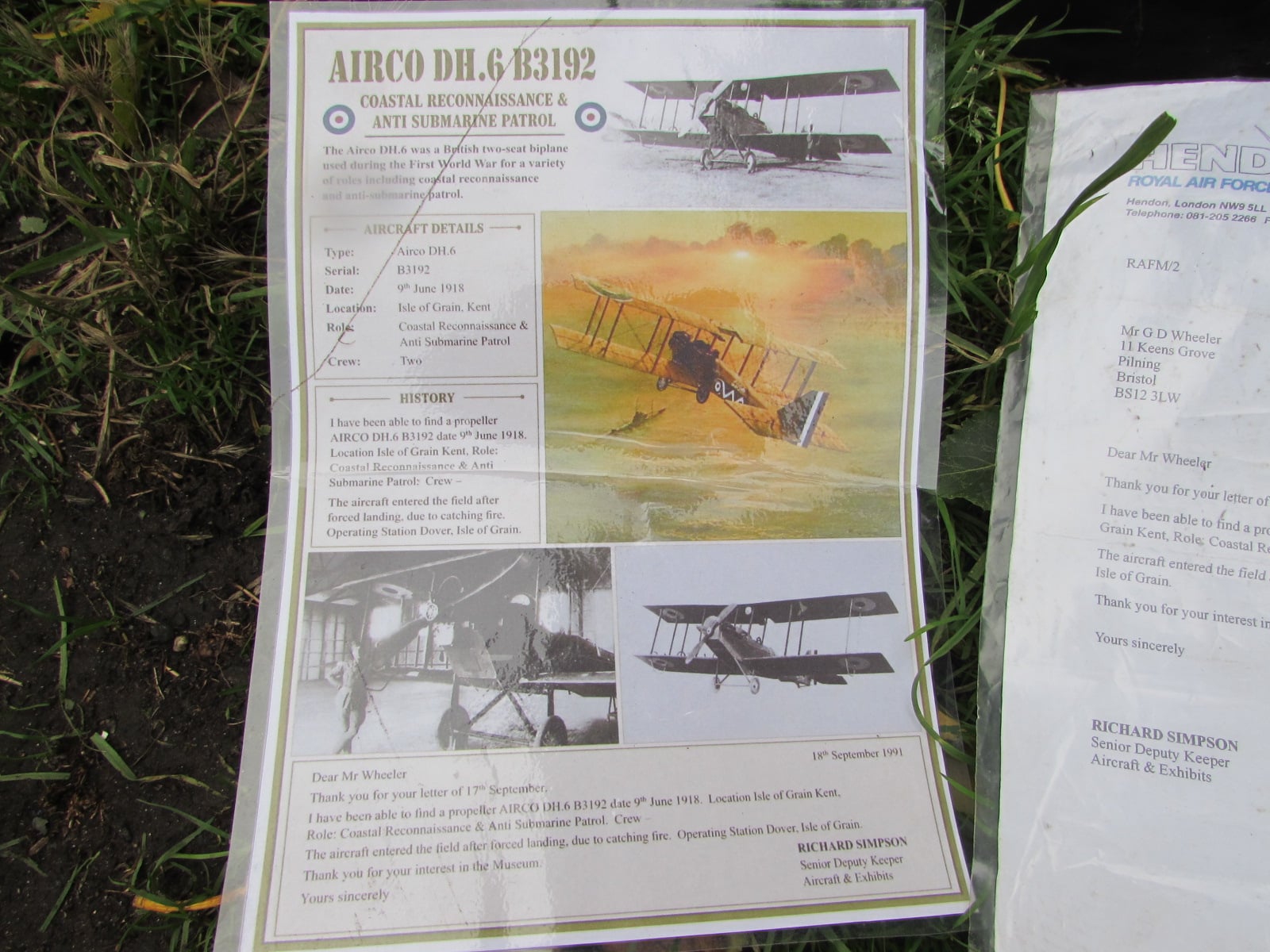
The accompanying Royal Air Force Museum letter records Airco DH.6 B3192 on 9th June 1918, with its location given as the Isle of Grain, Kent. Its operational role is described as coastal reconnaissance and anti-submarine patrol, operating from Dover.
The museum’s letter specifically states:
“The aircraft entered the field after forced landing, due to catching fire.”
The propeller’s burnt area at one end is an intriguing physical characteristic when considered alongside this documented incident. Although it cannot be established conclusively that the visible burning resulted from the recorded event, the correspondence provides a compelling historical association.
The surviving letter does not identify the aircrew or specify the precise cause of the fire.
Original Royal Air Force Museum Documentation
Included is the original correspondence dated 18th September 1991, on Royal Air Force Museum, Hendon, letterhead and signed by Richard Simpson, Senior Deputy Keeper, Aircraft & Exhibits.
The letter confirms that the museum had located a record for a propeller associated with Airco DH.6 B3192 and provides the aircraft’s date, location, operational role and forced-landing circumstances.
Original research correspondence of this kind is a valuable addition to an aviation relic, providing documentary context and a traceable starting point for further historical research.
Propeller Details
Aircraft type: Airco DH.6
Aircraft serial: B3192
Propeller length: 89-90 inches
Centre boss: Original brass identification plate retained
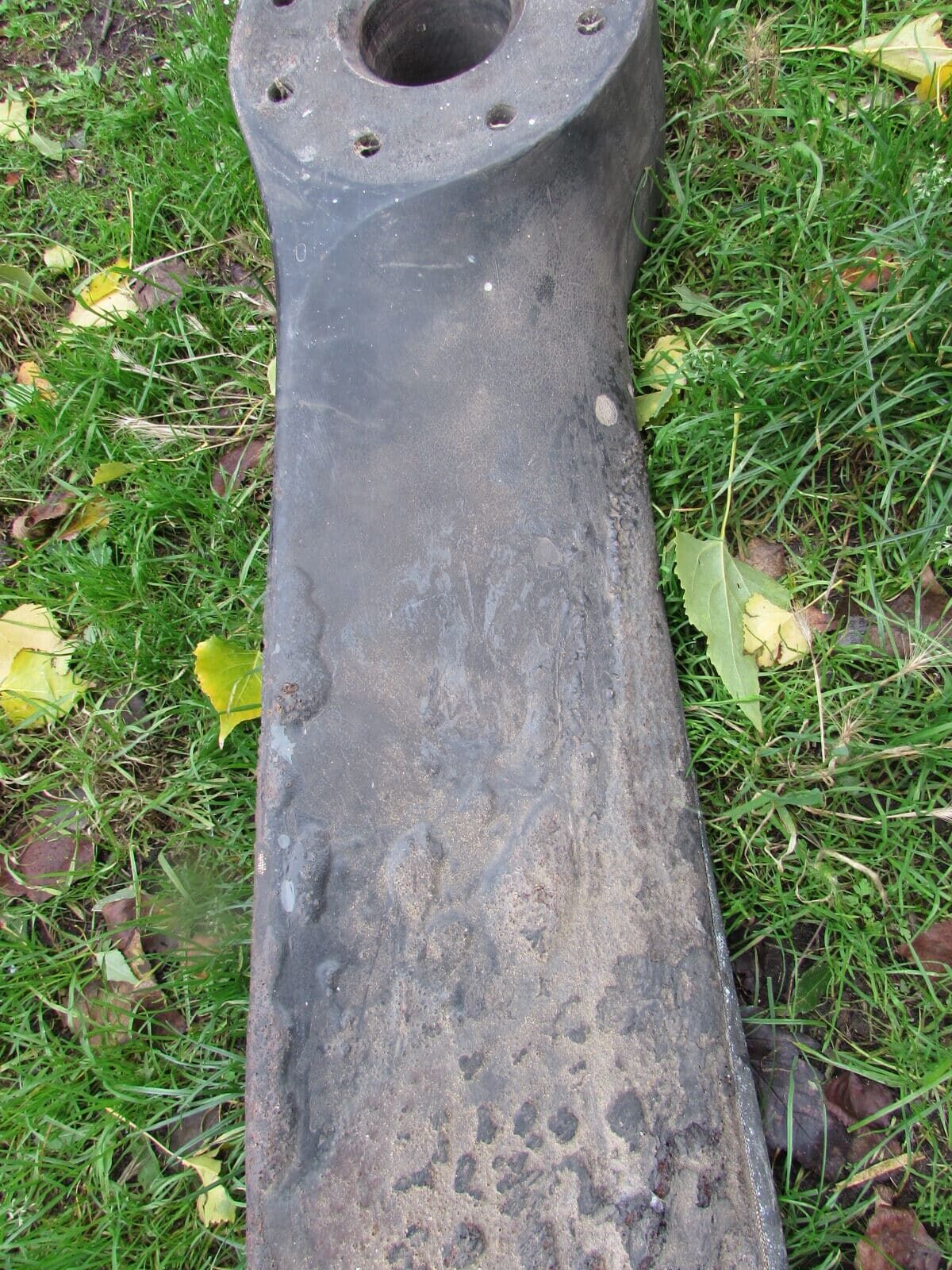
Condition: Historic condition, with a visible burnt area to one end
Recorded aircraft date: 9th June 1918
Recorded location: Isle of Grain, Kent
Recorded operational role: Coastal reconnaissance and anti-submarine patrol
Recorded incident: Forced landing after catching fire
Documentation: Original Royal Air Force Museum letter dated 18th September 1991
A Rare and Atmospheric First World War Aviation Relic
An evocative piece of early British military aviation history, combining an original aircraft propeller with surviving museum correspondence relating to a specific First World War aircraft and incident.
The original brass boss plate, visible burning and 89-90-inch length give the propeller considerable display appeal, while the accompanying letter adds an important documentary dimension.
An interesting acquisition for collectors of First World War aviation memorabilia, early RAF history and historic aircraft components.
Supplied with the original Royal Air Force Museum correspondence shown.
Historical attribution is based on the accompanying museum letter. The precise circumstances of the propeller’s recovery and whether its burnt area resulted from the recorded forced landing have not been independently established.
Due to size and weight , postage will have to be paid for , sorry


