Free UK Shipping | Enquire for Worldwide

£475.00
Original WW1 Trench Newspaper – The B.E.F. Times – No. 5, Vol. 1 – 10th April 1917 – Rare Western Front Publication – With 1943 Postal Envelope
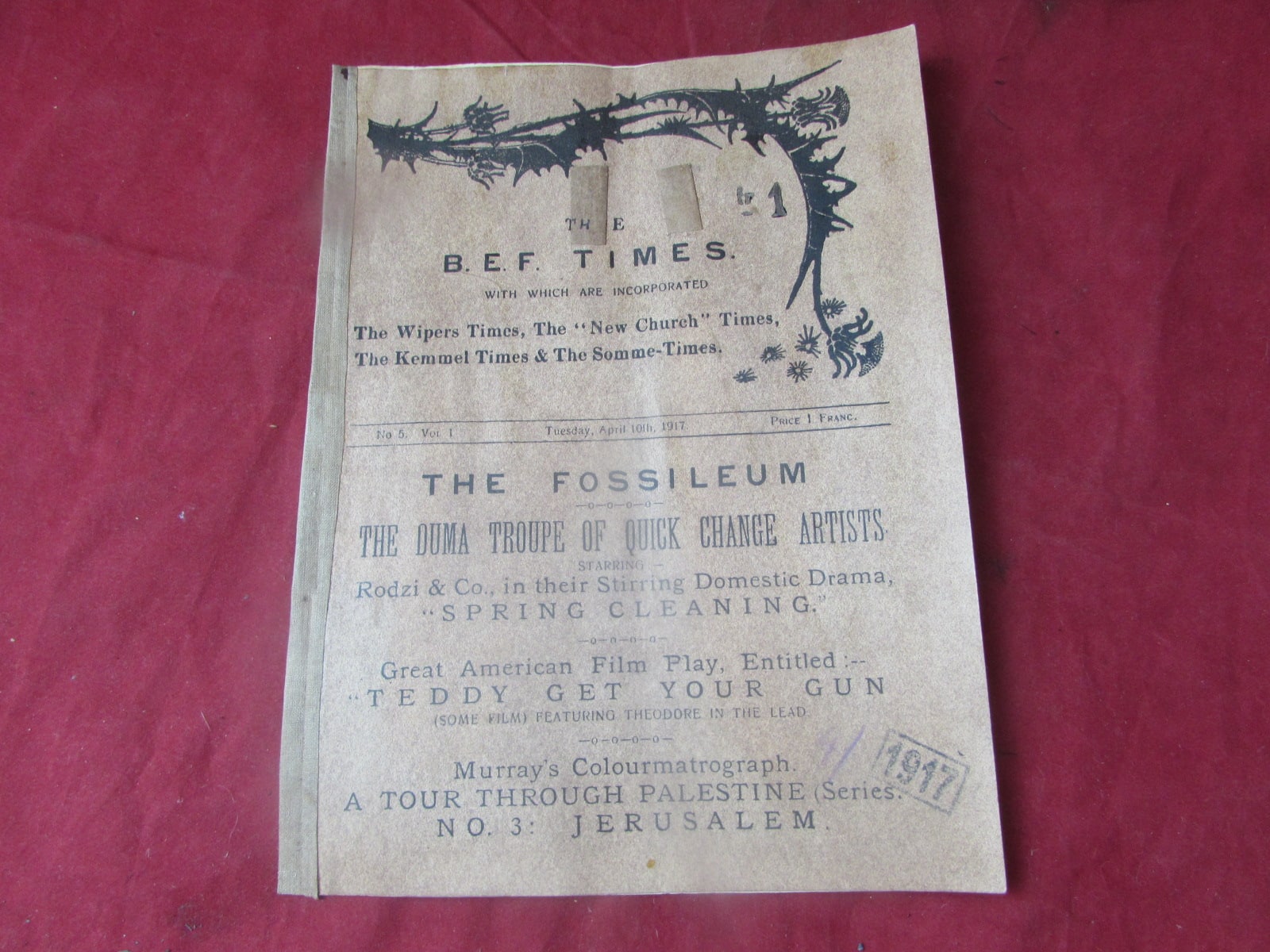
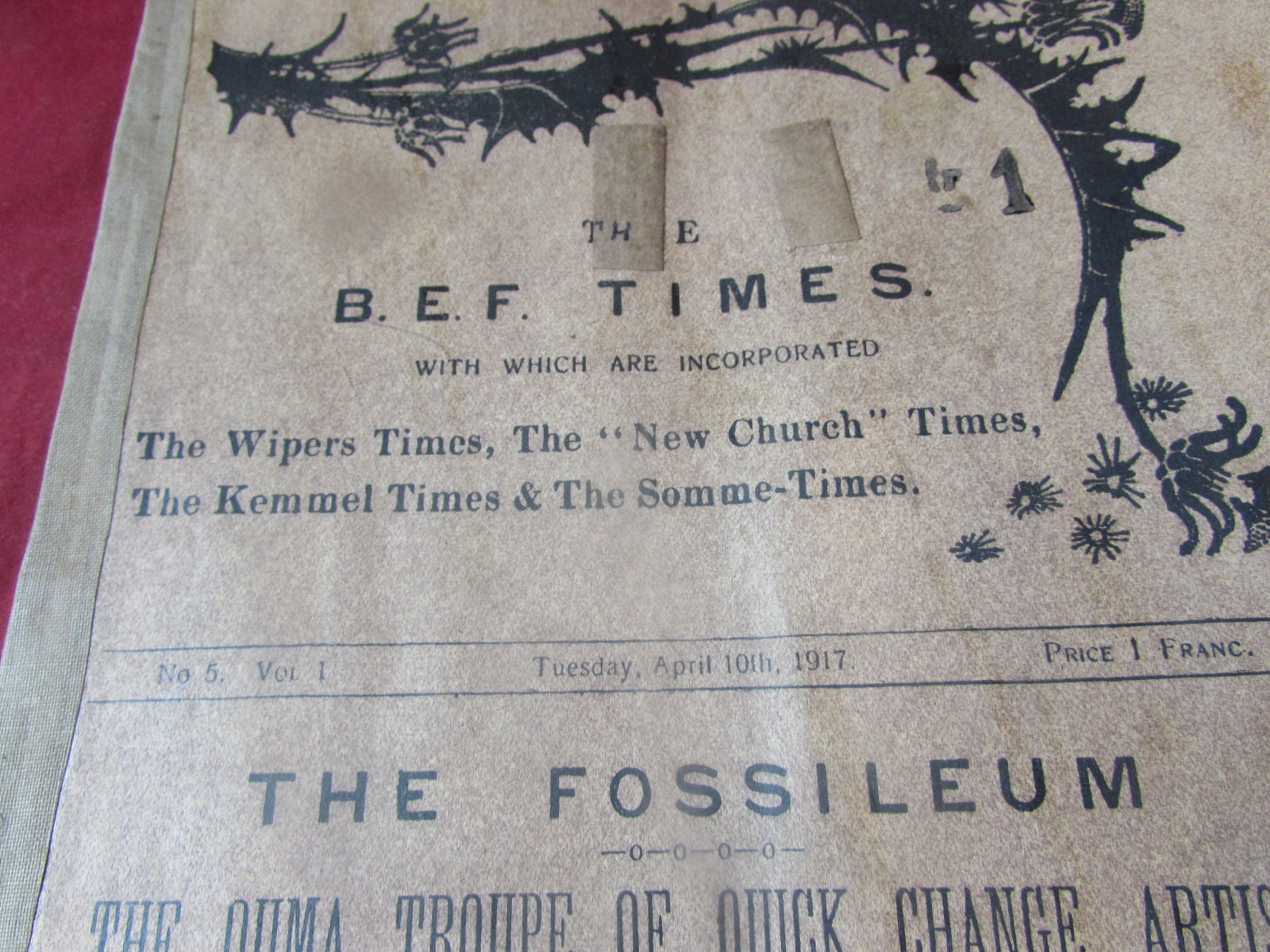
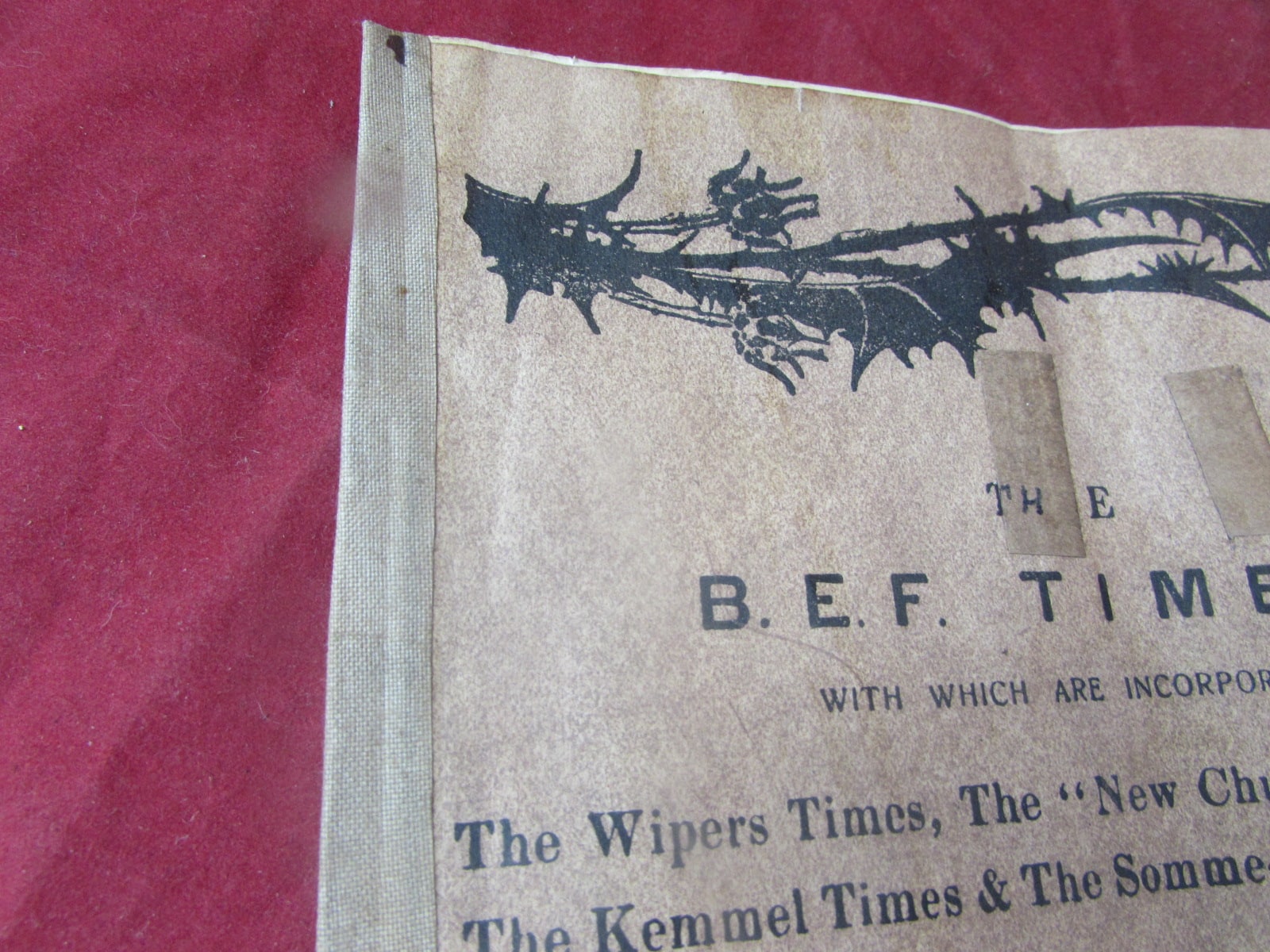
An exceptionally interesting original First World War trench newspaper, The B.E.F. Times, dated Tuesday, 10th April 1917, No. 5, Volume 1, priced at 1 Franc.
This is an increasingly scarce example of the famous series of trench newspapers produced by British soldiers serving on the Western Front. These publications are particularly sought after by collectors because they provide a remarkable insight into the humour, experiences and everyday lives of men serving in the trenches.
Historical Background
The publication was produced by members of the 12th Battalion, Sherwood Foresters (Nottinghamshire and Derbyshire Regiment), under the direction of Captain Fred Roberts and Lieutenant Jack Pearson.
The story began in February 1916, when the soldiers discovered a damaged but usable printing press amongst the ruins of Ypres, Belgium. A regimental sergeant, who had been a printer in civilian life, managed to get it working.
Their original publication became known as The Wipers Times, taking its name from the soldiers’ slang pronunciation of Ypres.
As the battalion moved around the Western Front, the newspaper changed its title to reflect its location. It subsequently appeared as:
The Wipers Times
The New Church Times
The Kemmel Times
The Somme Times
The B.E.F. Times
The Better Times
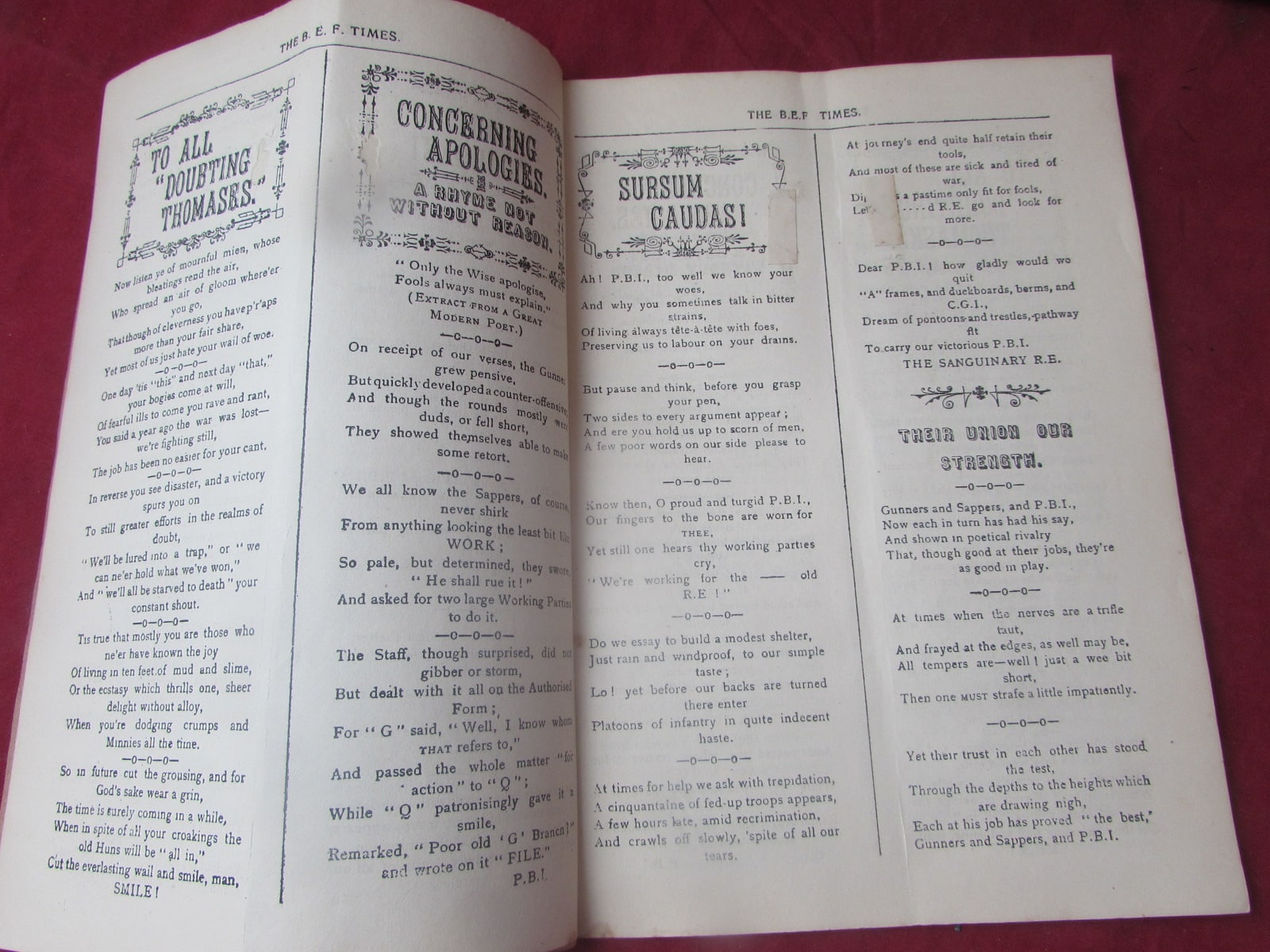
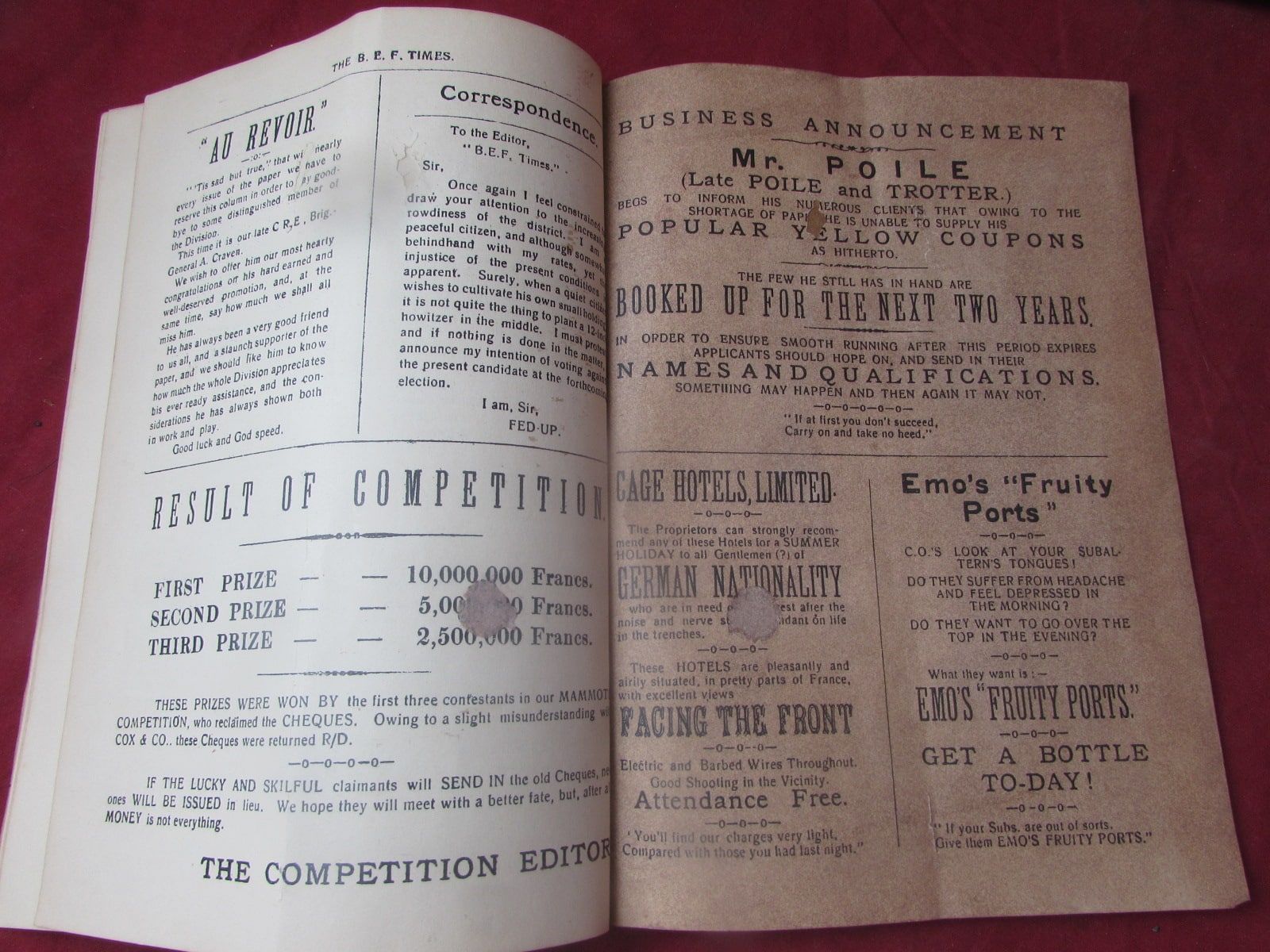
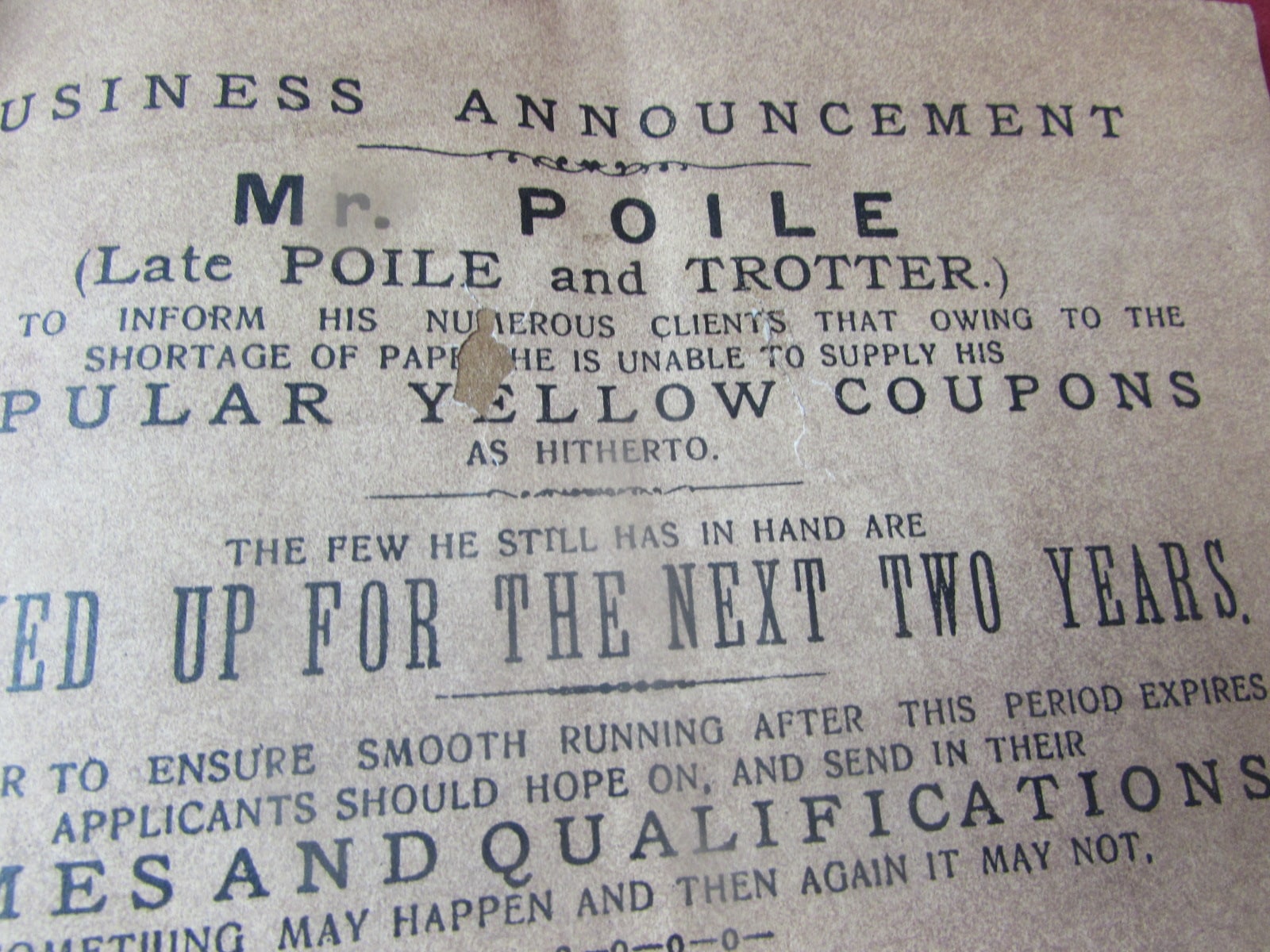
These remarkable publications became famous for their satirical humour, spoof advertisements, poetry and observations on military life.
This Particular Issue – April 1917
The front cover carries the heading:
“The B.E.F. Times – With Which Are Incorporated The Wipers Times, The New Church Times, The Kemmel Times & The Somme-Times.”
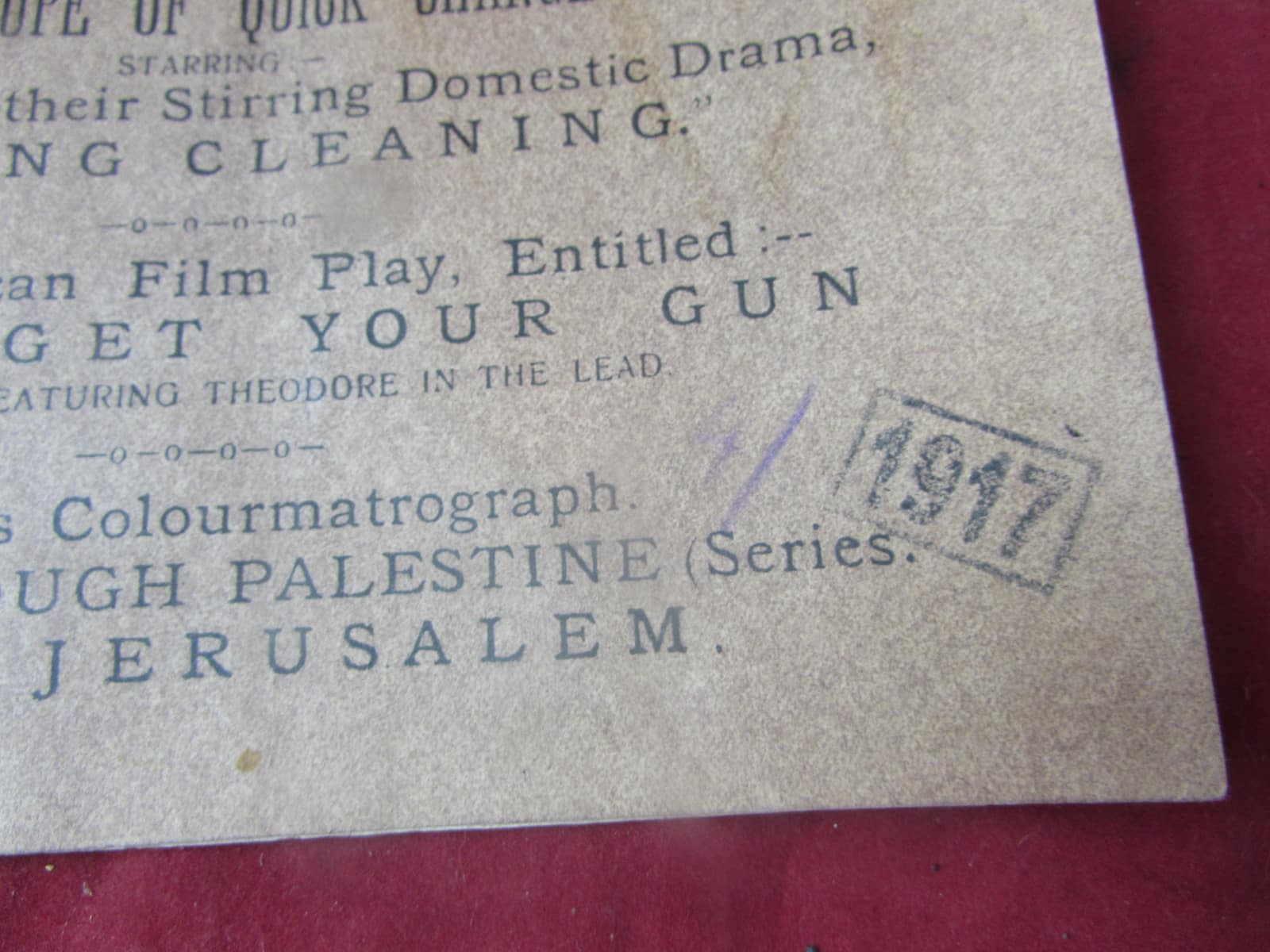
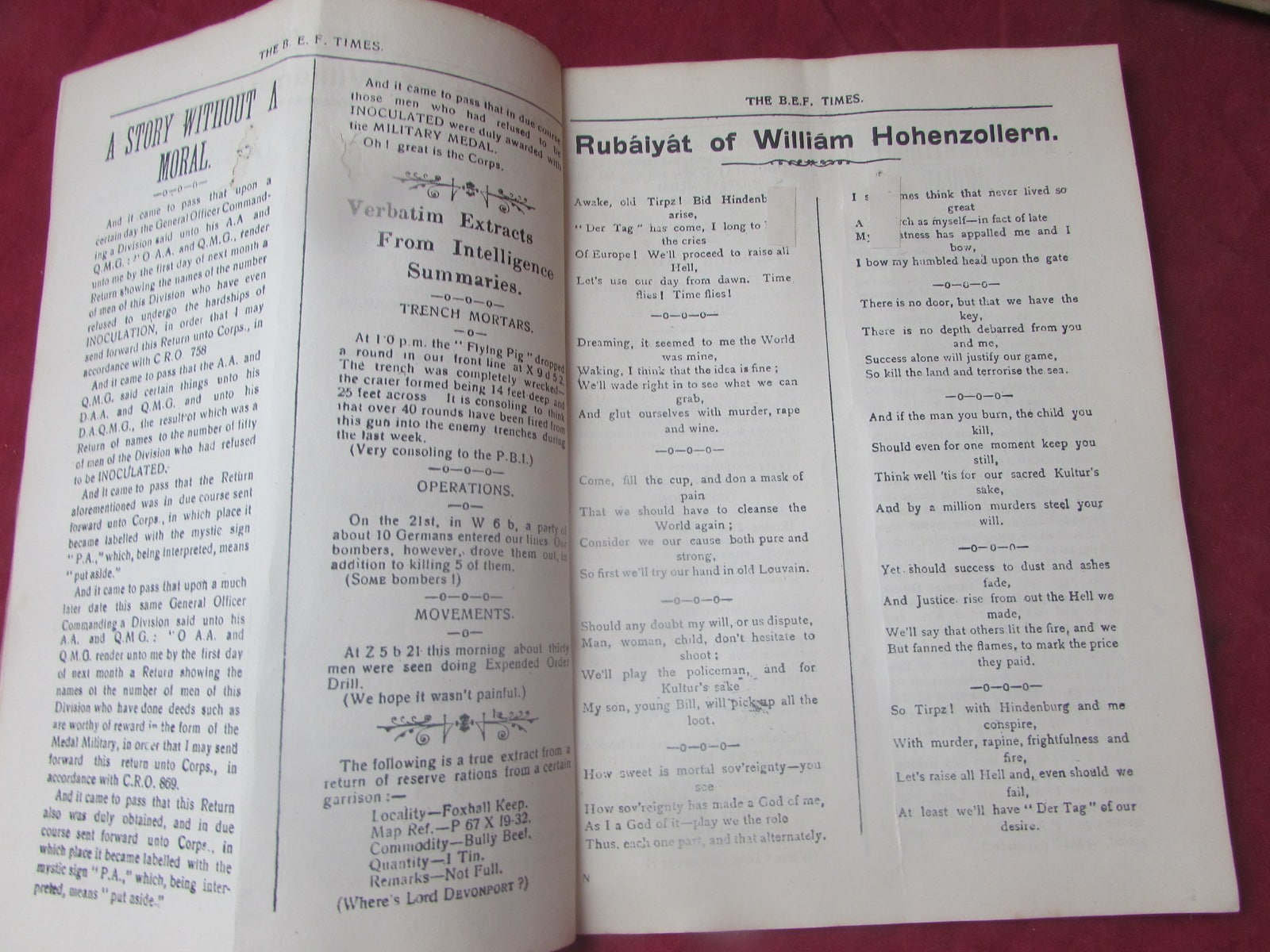
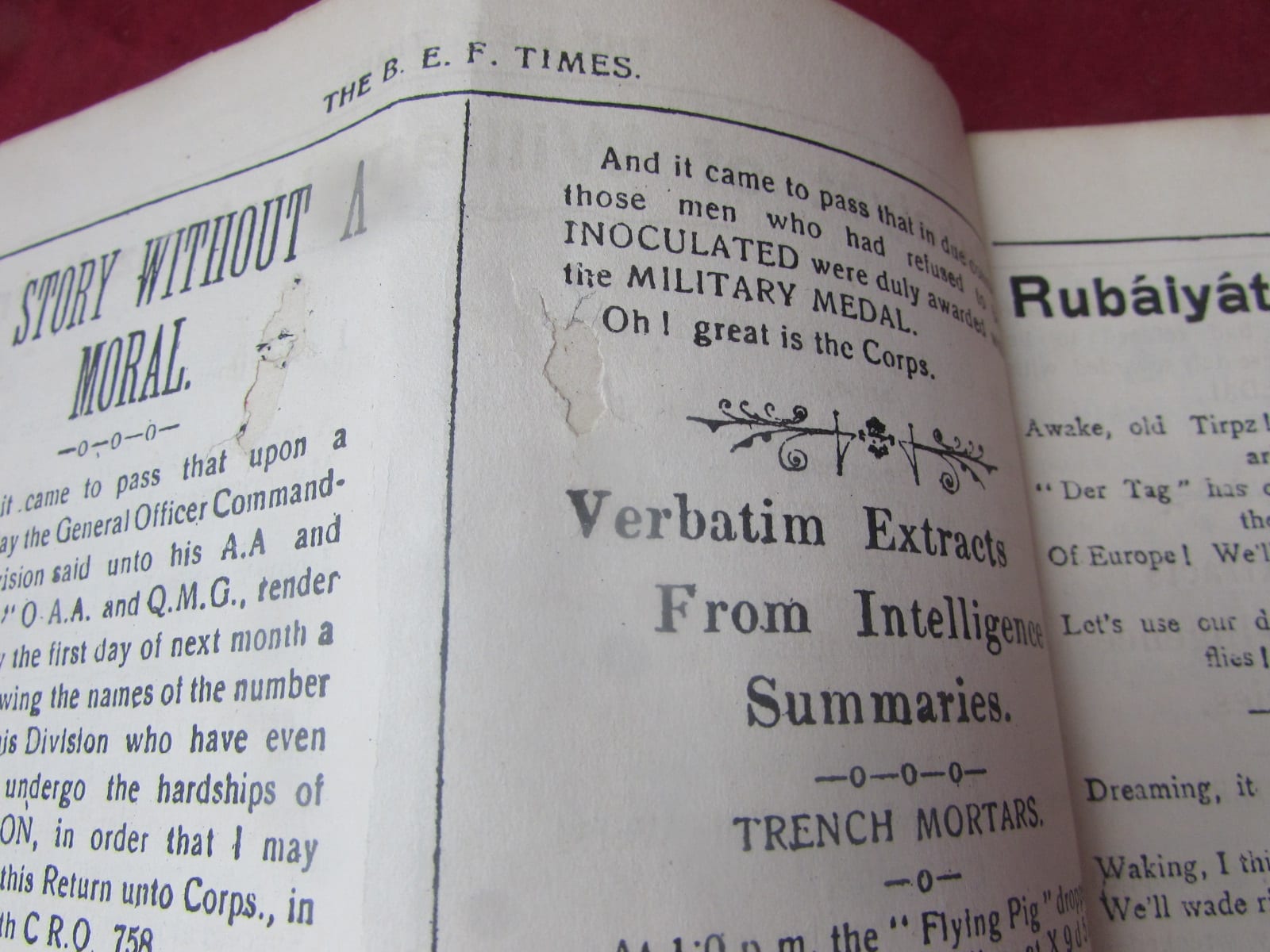
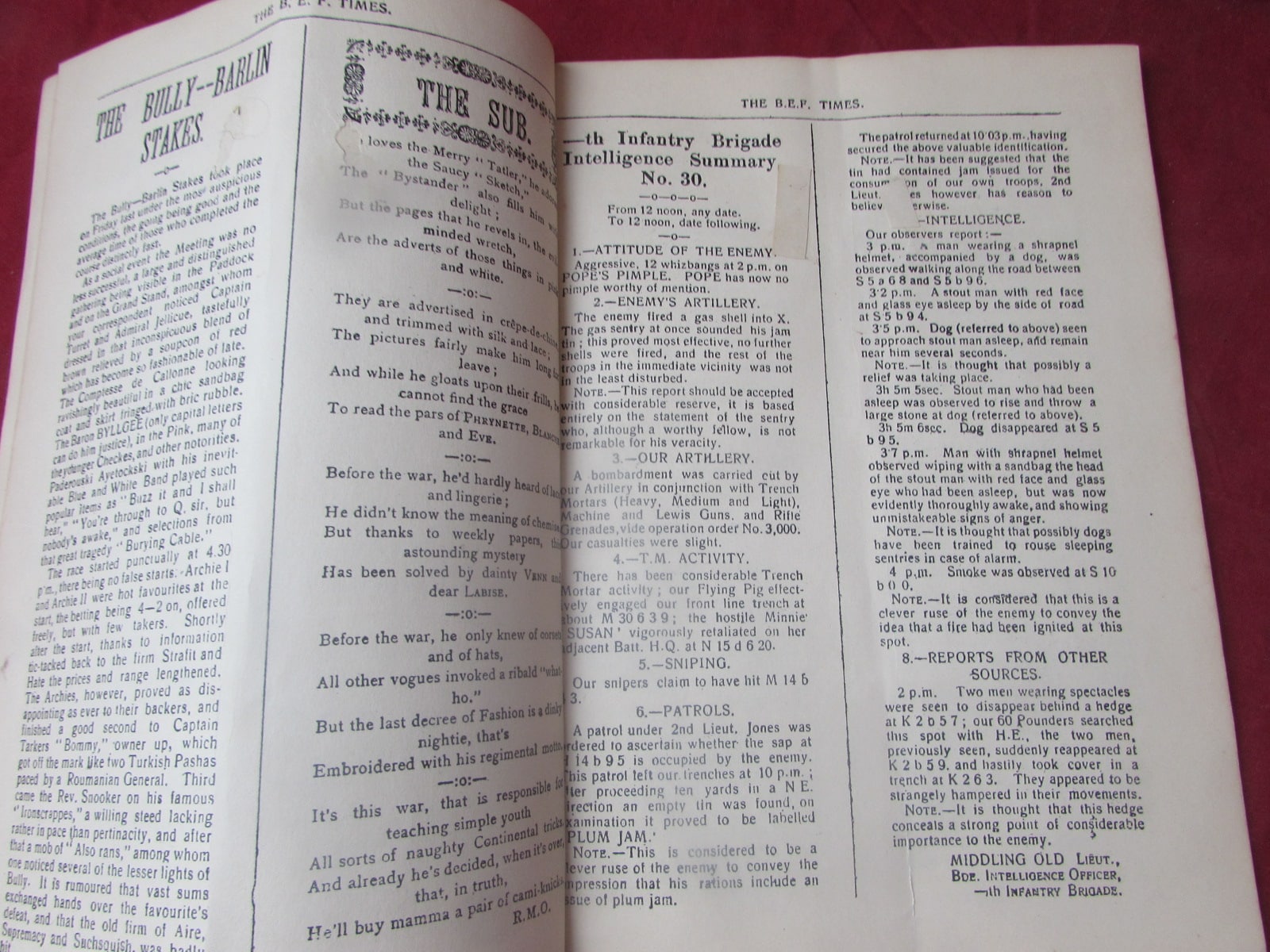
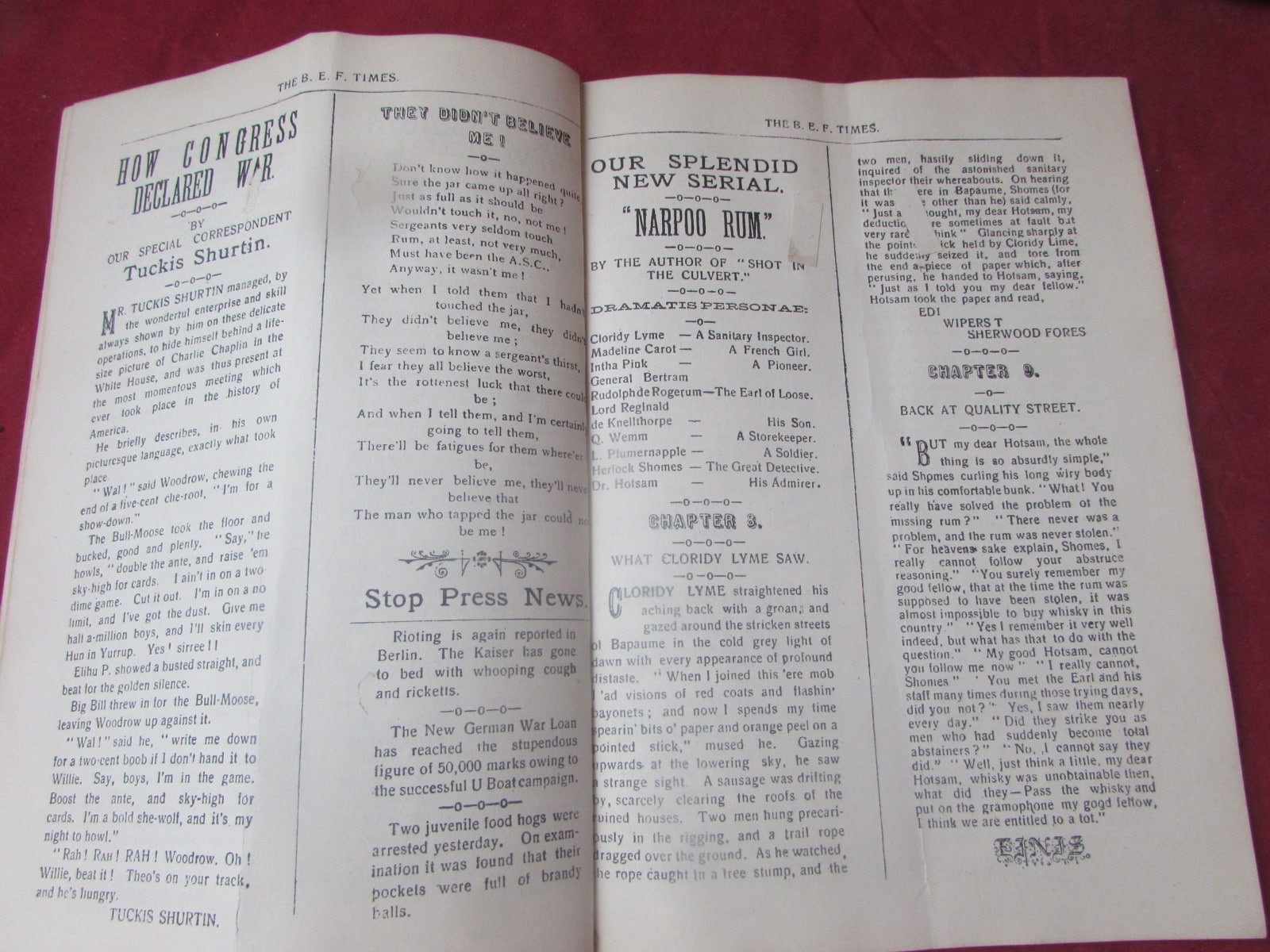
The contents are particularly interesting, featuring wartime satire, poetry, advertisements and contemporary battlefield reporting.
Highlights include:
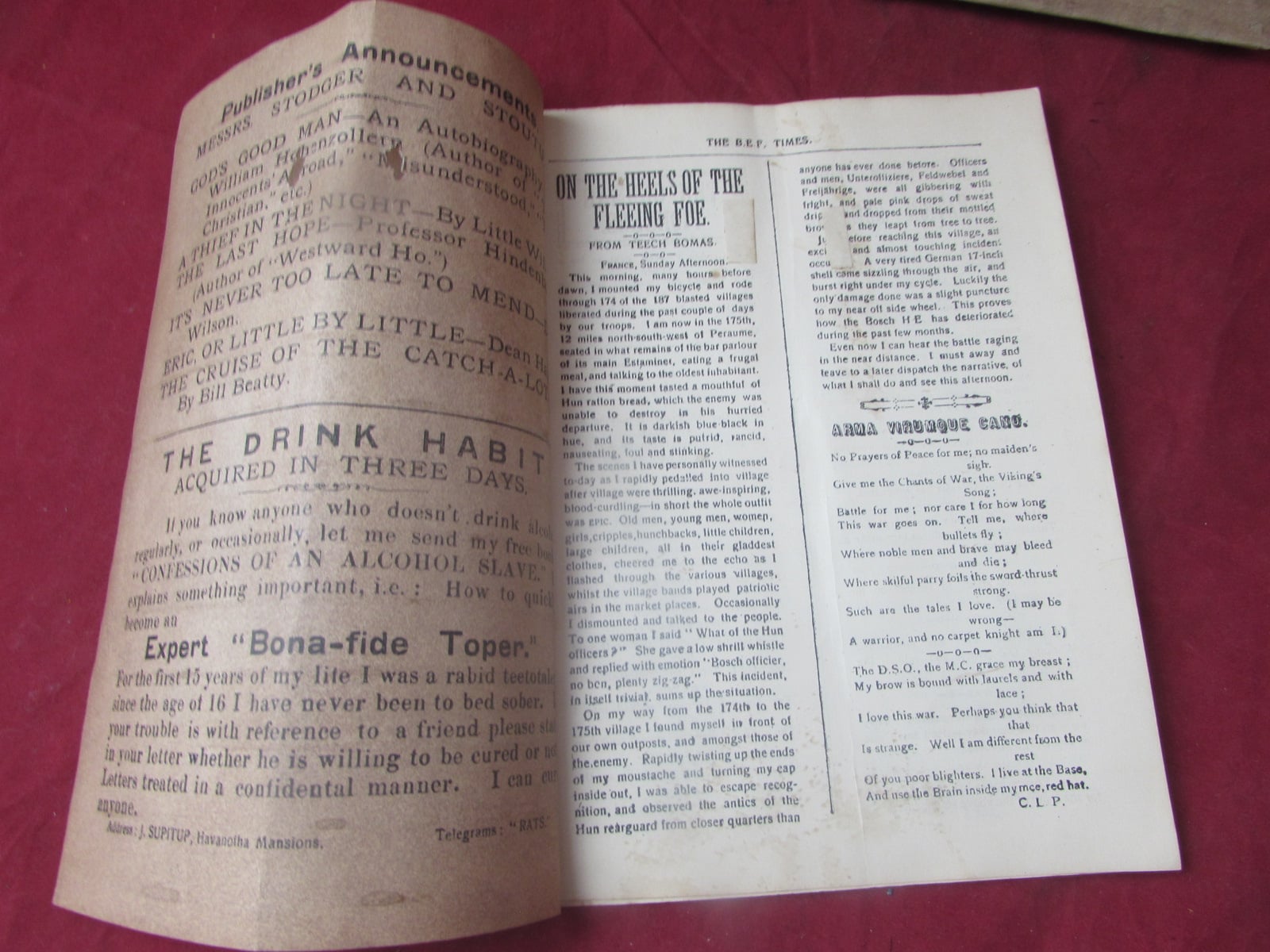
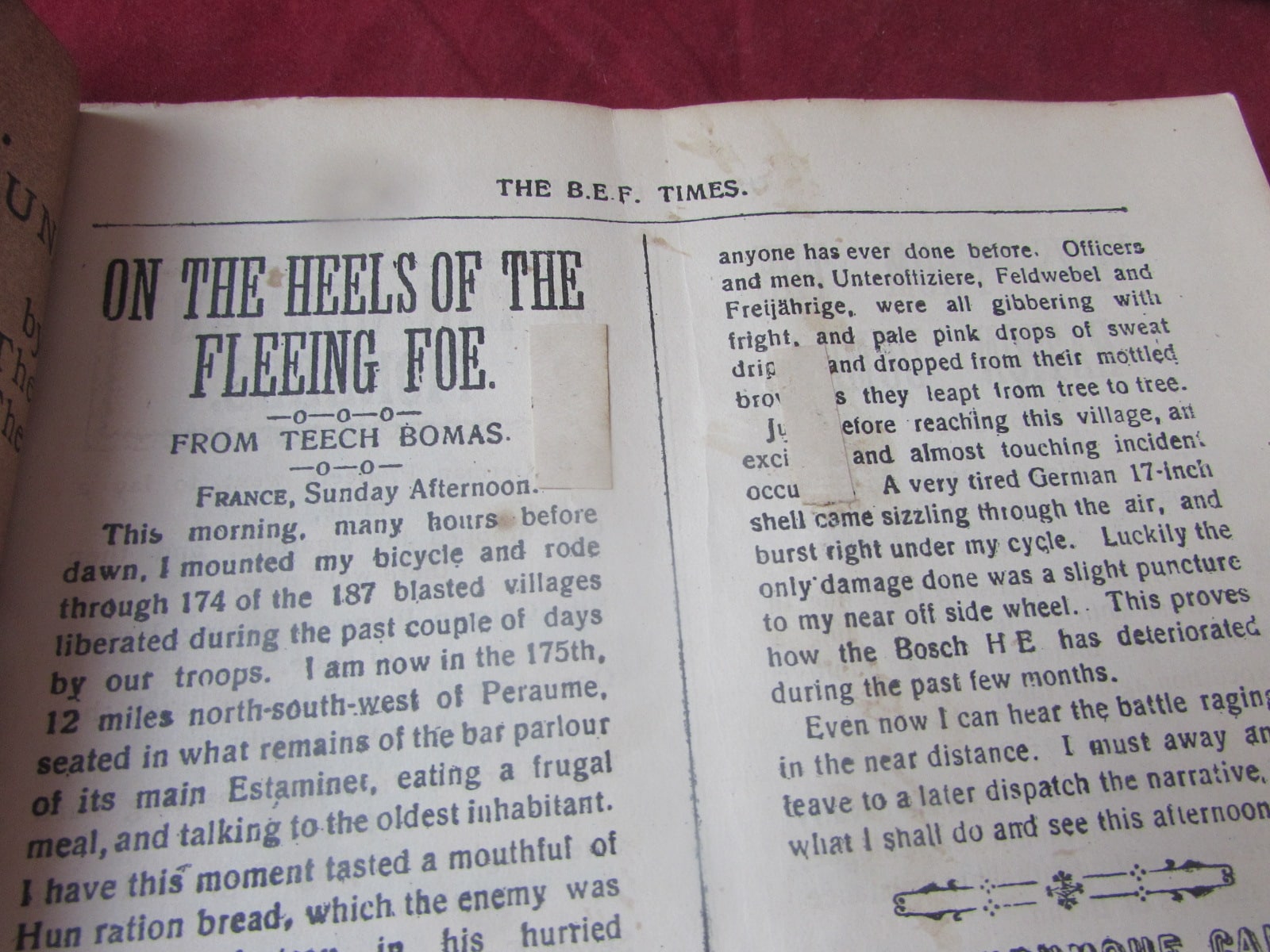
“On the Heels of the Fleeing Foe” – an account from France describing the advance of British troops through recently liberated villages.
“The Fossileum” – a humorous theatrical feature.
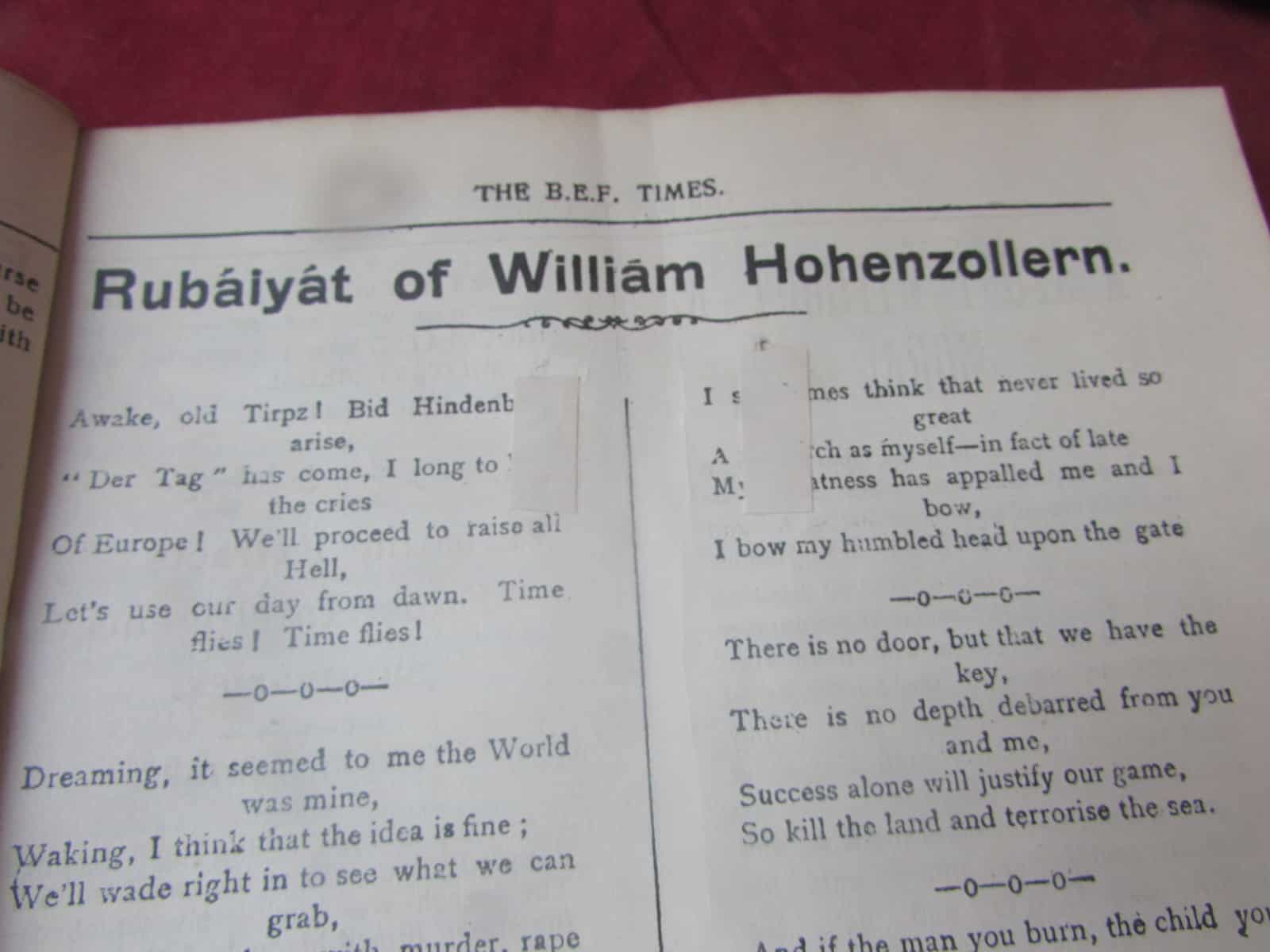
“The Rubaiyat of William Hohenzollern” – a satirical piece directed at the German leadership.
Trench mortar intelligence summaries and reports of military movements.
Humorous poetry and commentary reflecting the experiences of soldiers at the front.
Rarity and Collectability
Original examples of these trench newspapers are genuinely difficult to find, particularly individual wartime issues in surviving original condition.
Unlike mainstream newspapers, these were produced under difficult frontline conditions, with printing frequently interrupted by shellfire. Paper supplies and printing resources were limited, and the publications were intended primarily for the soldiers rather than widespread commercial distribution.
The National Army Museum confirms that the original Wipers Times began with a print run of just 100 copies, with subsequent editions also produced in relatively small numbers.
The B.E.F. Times forms an important part of this celebrated series. Original copies are now highly collectible, with surviving examples held in museum and specialist book collections.
This is an opportunity to acquire an original April 1917 issue rather than one of the later facsimile reproductions.
Accompanying 1943 Postal History
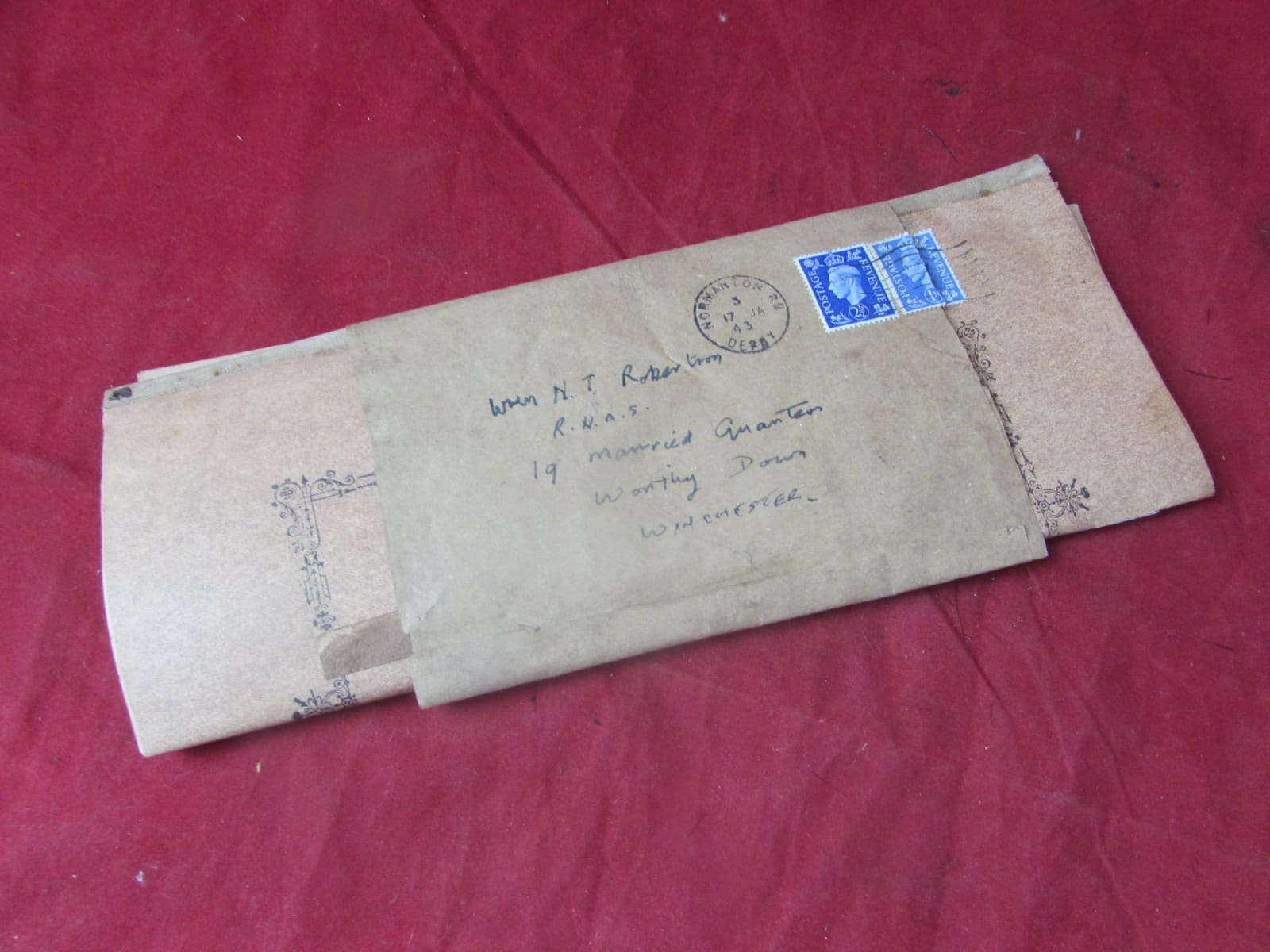
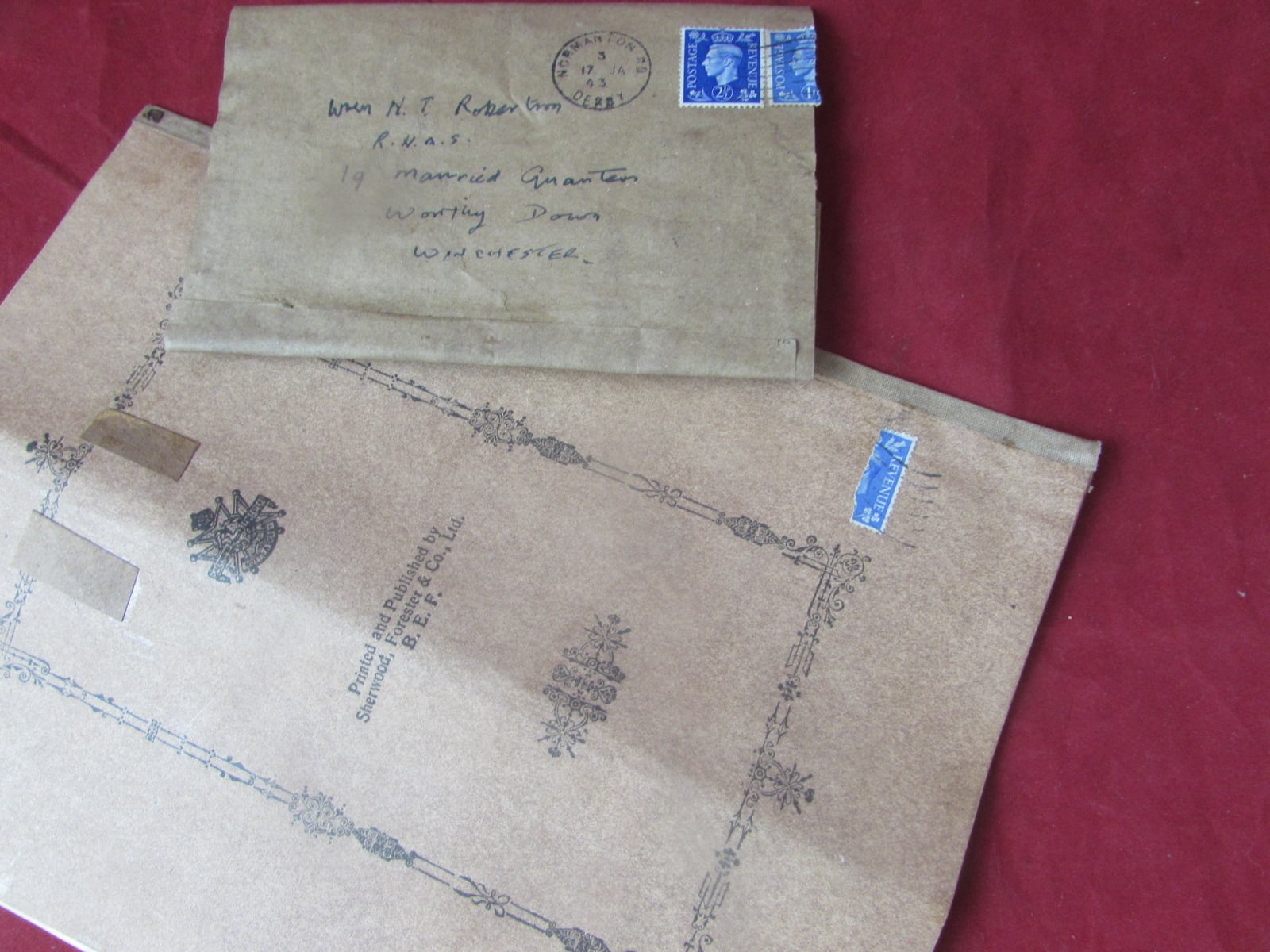
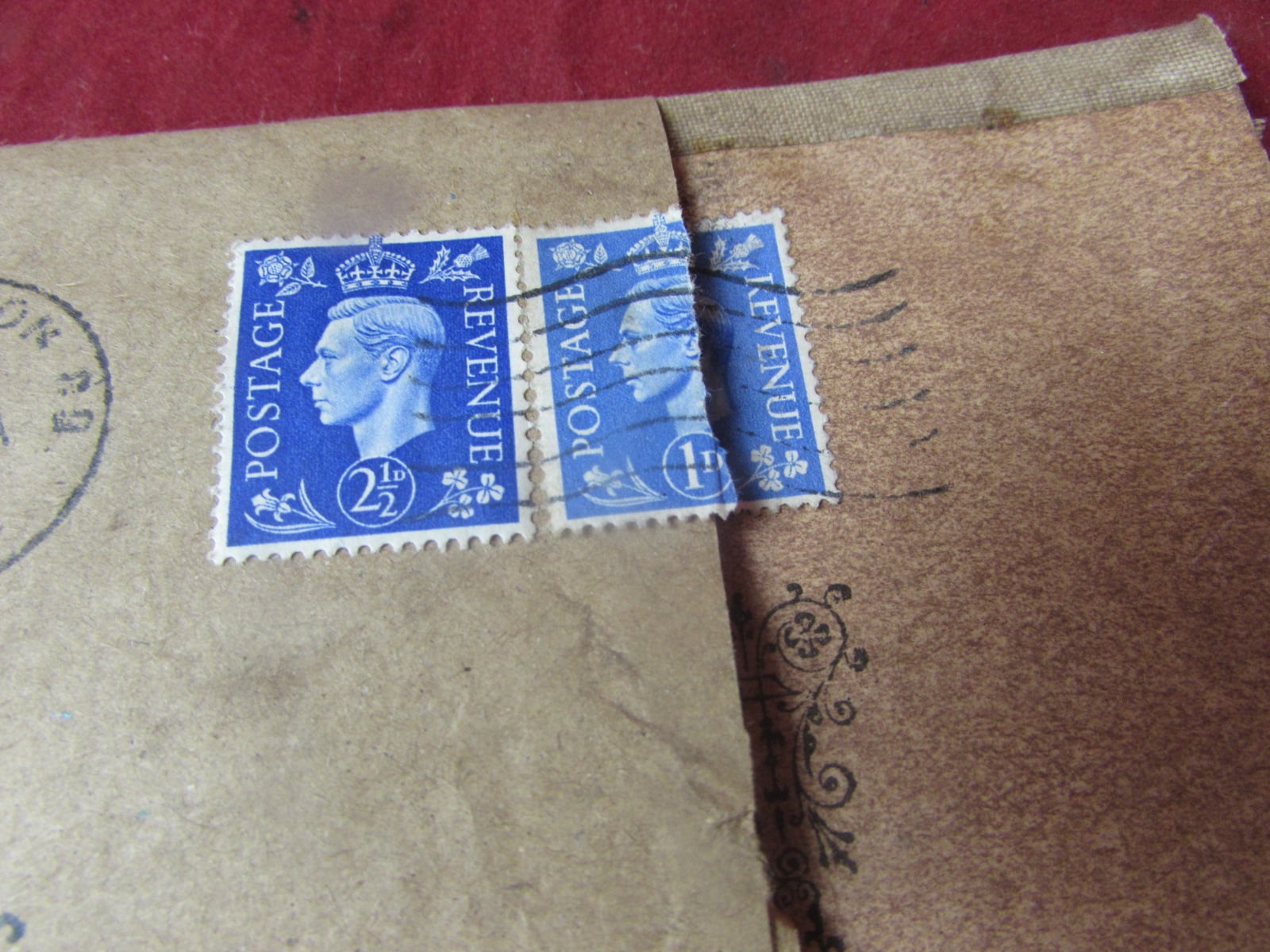
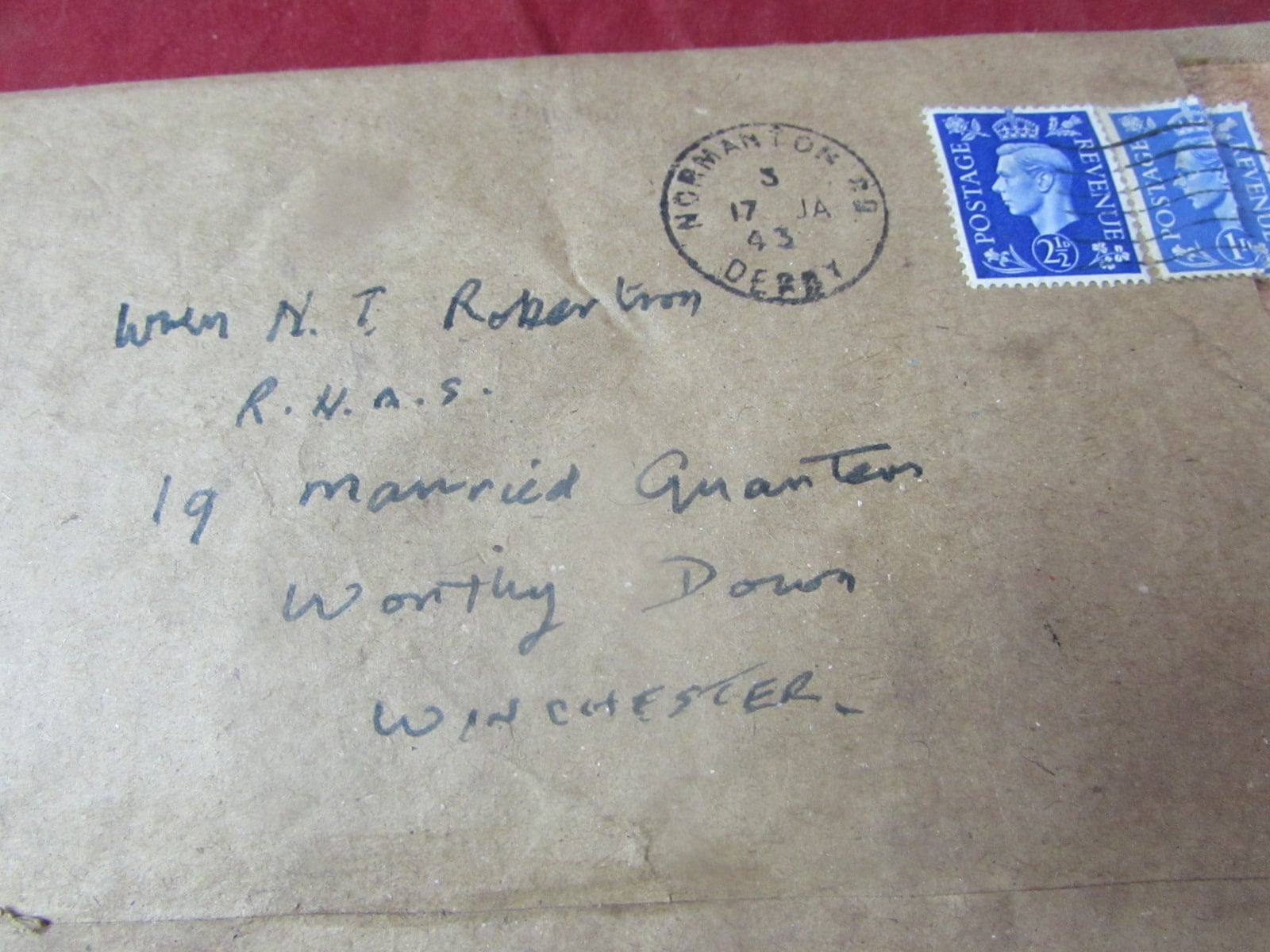
Adding further interest, the newspaper comes with an original addressed envelope bearing two George VI postage stamps and a January 1943 postmark.
The envelope is addressed to:
Wren N.T. Robertson
R.N.A.S.
19 Married Quarters
Worthy Down
Winchester
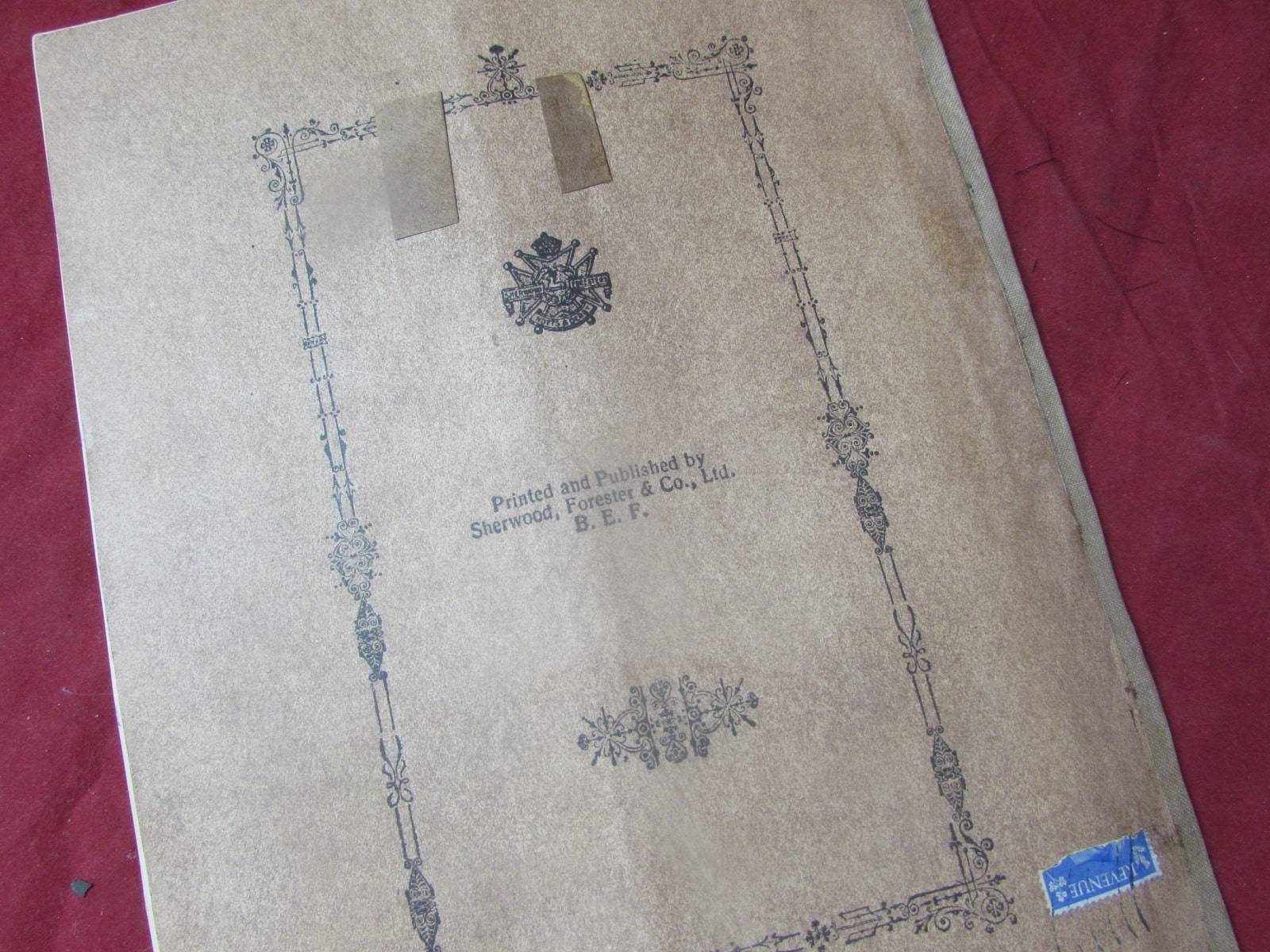
An especially unusual feature is that one of the postage stamps crosses over onto the original WW1 B.E.F. Times newspaper, with the post office cancellation mark also extending across the stamp and newspaper.
This creates a particularly interesting physical association between the two pieces of wartime ephemera, spanning the First and Second World Wars.
Both items are offered together as found.
Condition
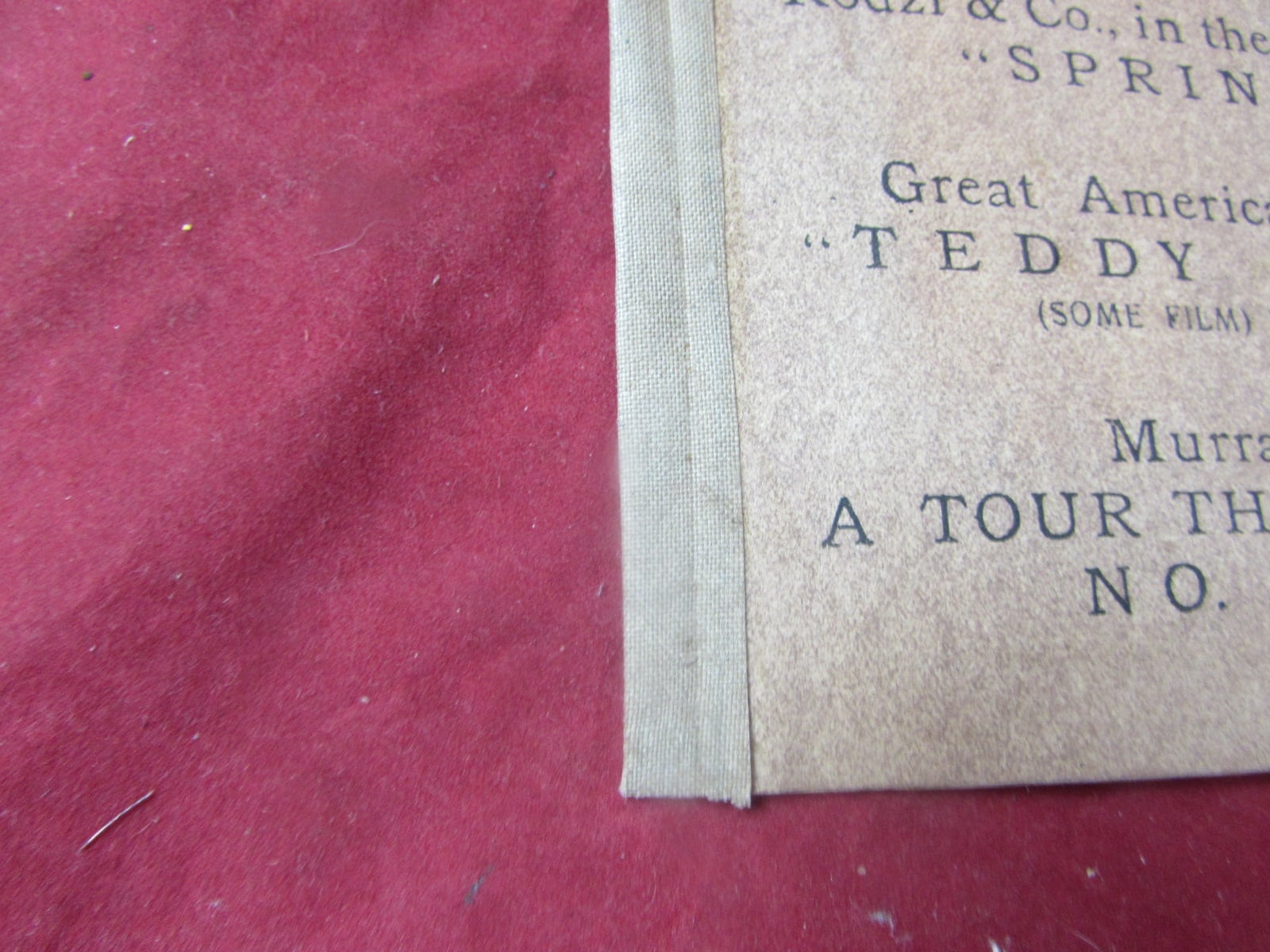
Original used condition, with age-related discolouration, creasing and handling marks. Some small areas of old tape or paper repairs are visible internally. The newspaper retains its original printed cover and contents. The accompanying envelope also shows age and handling wear. All pages intact and complete inc the back cover.
A fascinating and increasingly scarce original First World War trench publication, made even more interesting by the accompanying 1943 postal envelope.
An excellent addition to any collection of WW1 militaria, trench newspapers, Western Front history or original military ephemera.


Featured Items, General Militaria, R F C & R A F, Sale, World War I


Helmets, World War I


World War I


Featured Items, R F C & R A F, Sale, World War I