Free UK Shipping | Enquire for Worldwide

£3,550.00
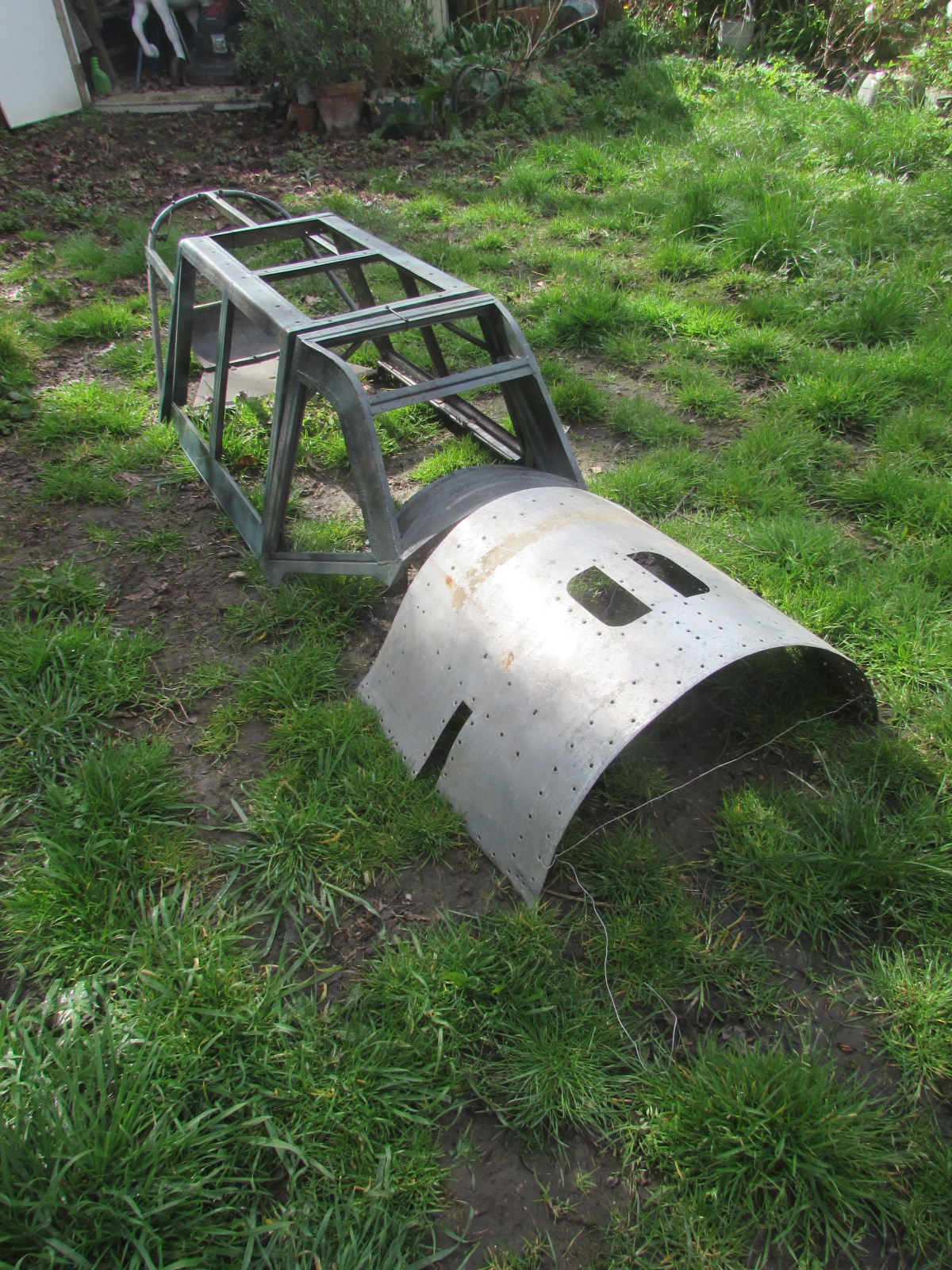
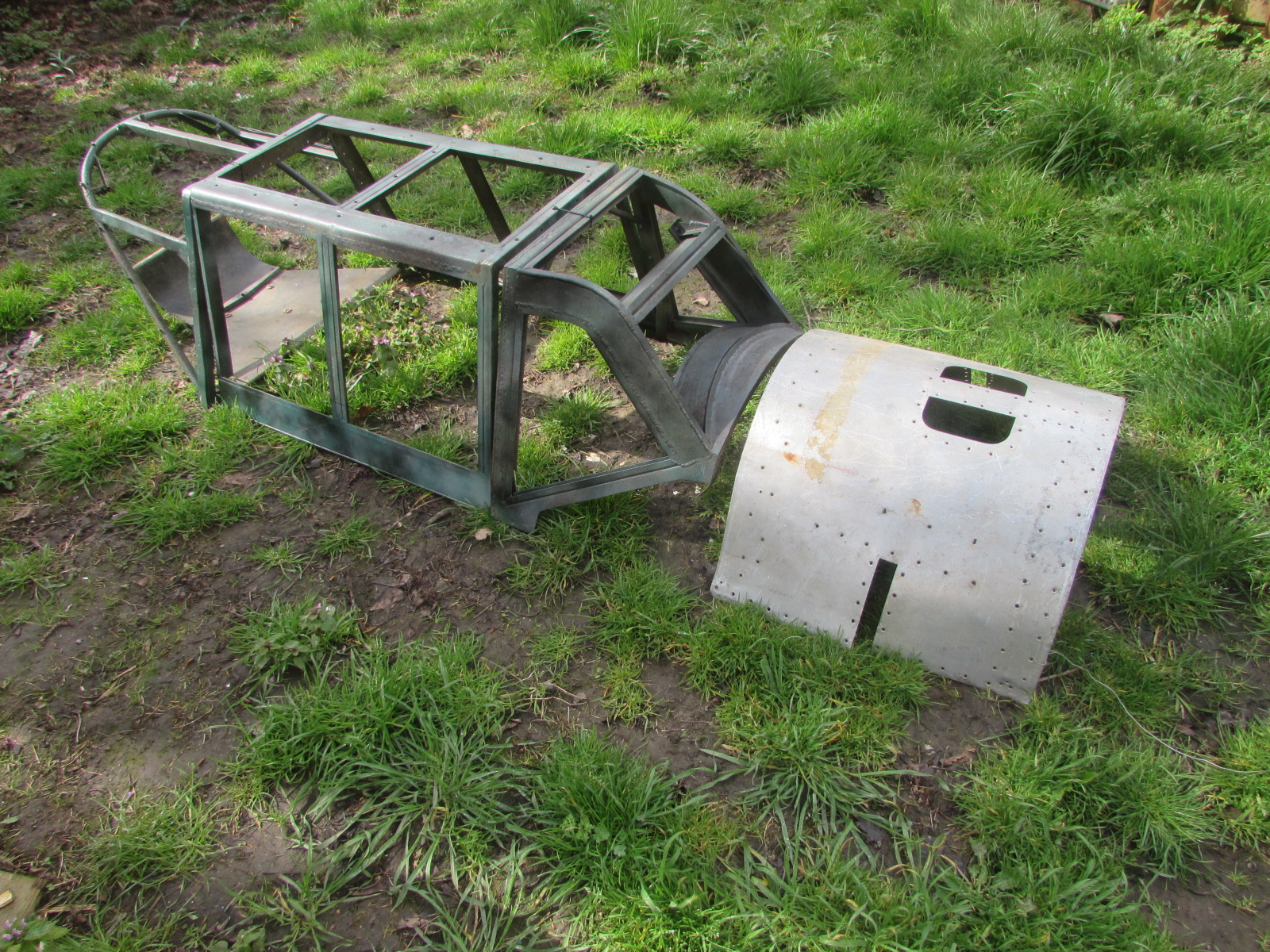
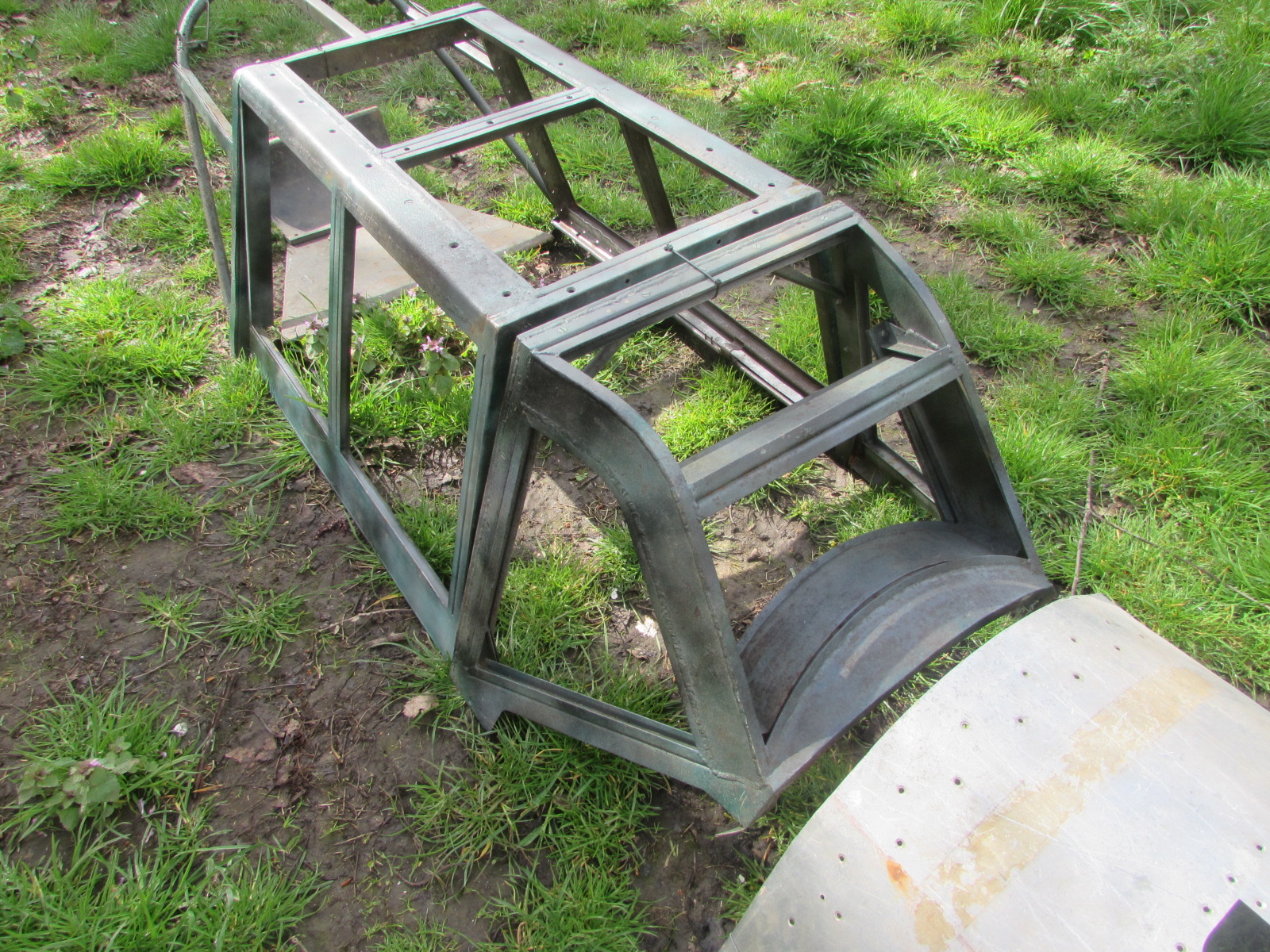
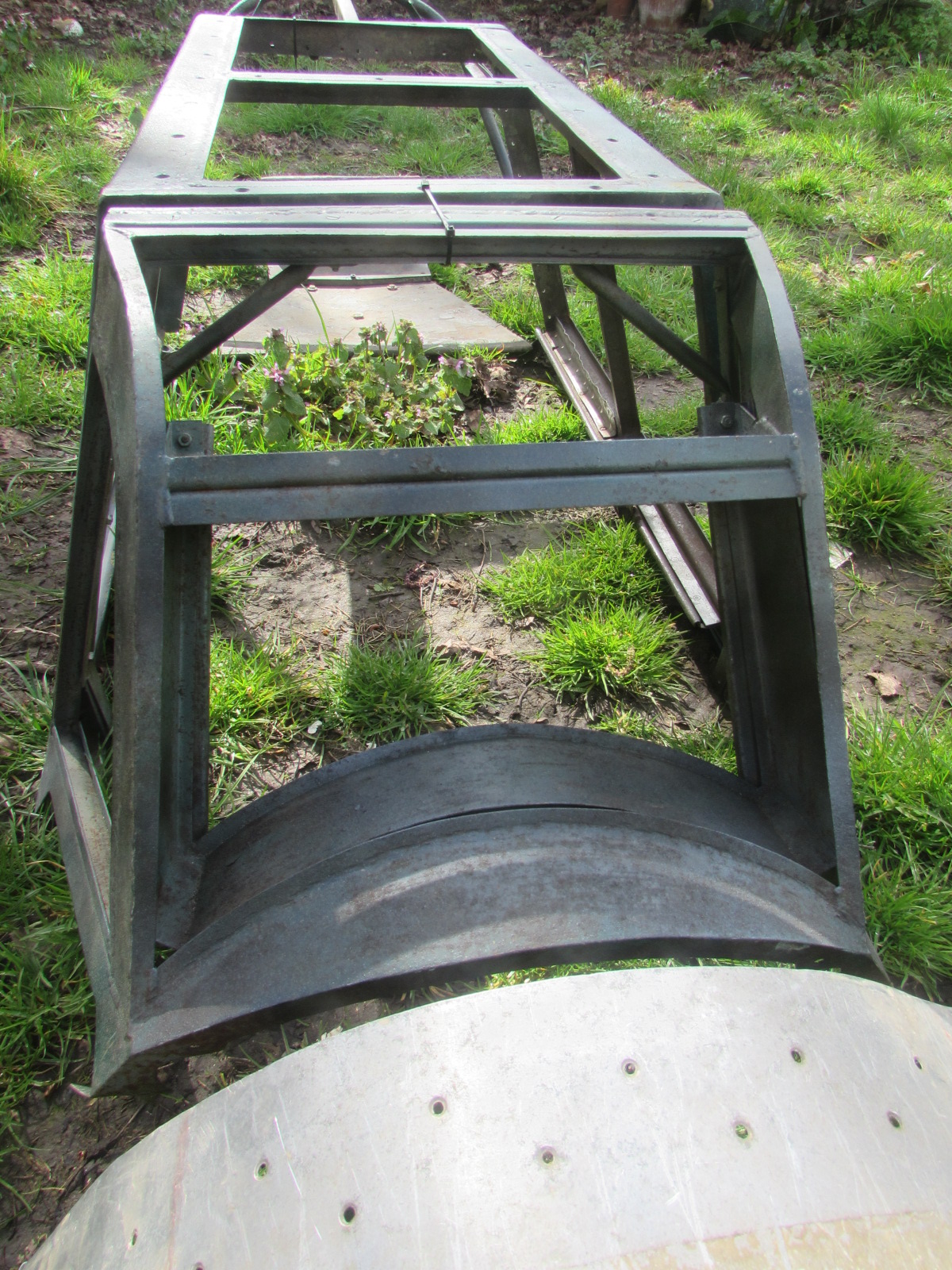
WW2 Messerschmitt Bf 109 G 2, Cockpit Canopy, and Head Armour
RARE ITEM, An ORIGINAL 1940s Messerschmitt Bf109 G2 cockpit canopy, Three section piece canopy ,rear angled fuselage section, main hinged centre section and front windscreen section. There is also the angled head and large back armour plating which comes with this piece and also the front 109 engine cowling.
There are some imprinted letters to the armour plate and some painted letters.
The Bf109 G series was developed from the identical F -series, although with some detail differences, the use of heavier ,welded framing for the cockpit transparencies, and extra armour for the fuel tanks among others.
The G2 which this piece is started production in May 1942, performance wise it was identical to the G1. The canopy reverted to one layer of glazing and incorporated the angled head armour.
WW2 Messerschmitt Bf 109 G2 Cockpit Canopy and Head Armour.
RARE ITEM, An ORIGINAL 1940s Messerschmitt Bf109 G2 cockpit canopy, Three section piece canopy ,rear angled fuselage section, main hinged centre section and front windscreen section. There is also the angled head and large back armour plating which comes with this piece and also the front 109 engine cowling.
There are some imprinted letters to the armour plate and some painted letters.
The Bf109 G series was developed from the identical F -series, although with some detail differences, the use of heavier ,welded framing for the cockpit transparencies, and extra armour for the fuel tanks among others.
The G2 which this piece is started production in May 1942, performance wise it was identical to the G1. The canopy reverted to one layer of glazing and incorporated the angled head armour.
All the history i know about this is that it came from Calais, France ,
WW2 Messerschmitt Cockpit Canopy and Head Armour.
Collection only due to size
The Messerschmitt Bf 109 is a German World War II fighter aircraft that was, along with the Focke-Wulf Fw 190, the backbone of the Luftwaffe‘s fighter force.[3] The Bf 109 first saw operational service in 1937 during the Spanish Civil War and was still in service at the end of World War II in 1945.[3] It was one of the most advanced fighters when it first appeared, with an all-metal monocoque construction, a closed canopy, and retractable landing gear. It was powered by a liquid-cooled, inverted-V12 aero engine.[4] It was called the Me 109 by Allied aircrew and some German aces, even though this was not the official German designation.[5]
Like most German aircraft produced in World War II, the Bf 109 G-series was designed to adapt to different operational tasks with greater versatility; larger modifications to fulfil a specific mission task, such as long-range reconnaissance or long-range fighter-bomber, were with “Rüststand” and given a “/R” suffix, smaller modifications on the production line or during overhaul, such as equipment changes, were made with kits of pre-packaged parts known as Umrüst-Bausätze, usually contracted to Umbau and given a “/U” suffix. Field kits known as Rüstsätze were also available but those did not change the aircraft designation. Special high-altitude interceptors with GM-1 nitrous oxide injection high-altitude boost and pressurized cockpits were also produced.

Bf 109G-2, Wings of Dream Museum in São Carlos, Brazil
The newly fitted Daimler-Benz DB 605A engine was a development of the DB 601E engine utilised by the preceding Bf 109 F-4; displacement and compression ratio were increased as well as other detail improvements to ease large-scale mass production. Takeoff and emergency power of 1,475 PS (1,455 hp, 1,085 kW) was achieved with 1.42 atm (42.5 inches/6.17 lbs) of boost at 2,800 rpm. The DB 605 suffered from reliability problems during the first year of operation, and this output was initially banned by VT-Anw.Nr.2206, forcing Luftwaffe units to limit maximum power output to 1,310 PS (1,292 hp, 964 kW) at 2,600 rpm and 1.3 atm manifold pressure (38.9 inches/4.4 lbs). The full output was not reinstated until 8 June 1943 when Daimler-Benz issued a technical directive.[62] Up to 1944, the G-series was powered by the 1,475 PS Daimler-Benz DB 605 driving a three-blade VDM 9-12087A variable-pitch propeller with a diameter of 3 m (9.8 ft) with even broader blades than used on the F-series. Pitch control, as on the 109F, was either electro-mechanical (automatic) or manual-electric using a thumb-switch on the throttle lever.[62] From 1944 a new high-altitude propeller with broader blades was introduced, designated VDM 9-12159, and was fitted to high-altitude variants with the DB 605AS or D-series engines.
The early versions of the Bf 109G closely resembled the Bf 109 F-4 and carried the same basic armament; however, as the basic airframe was modified to keep pace with different operational requirements, the basically clean design began to change. From the spring of 1943, the G-series saw the appearance of bulges in the cowling when the 7.92 mm (.312 in) MG 17 were replaced with 13 mm (.51 in) MG 131 machine guns (G-5 onwards) due to the latter’s much larger breechblock, and on the wings (due to larger tyres), leading to the Bf 109 G-6’s nickname “Die Beule” (“The Bulge”). The Bf 109G continued to be improved: new clear-view cockpits, greater firepower in the form of the 30 mm (1.18 in) MK 108 cannon were introduced in late 1943; and a new, enlarged supercharger in the high-altitude DB 605AS engine, a larger vertical stabilizer (G-5 onwards), and MW 50 power boost in 1944.


