Free UK Shipping | Enquire for Worldwide

£110.00
WW2 ARP, Home Guard, British Army Metal Stretchers (RARE)
Ww2 British metal stretchers, ARP, Home Guard, British Army, First aid, in great condition with original green paint from the period, extended handles are not missing as this one has been blanked off.
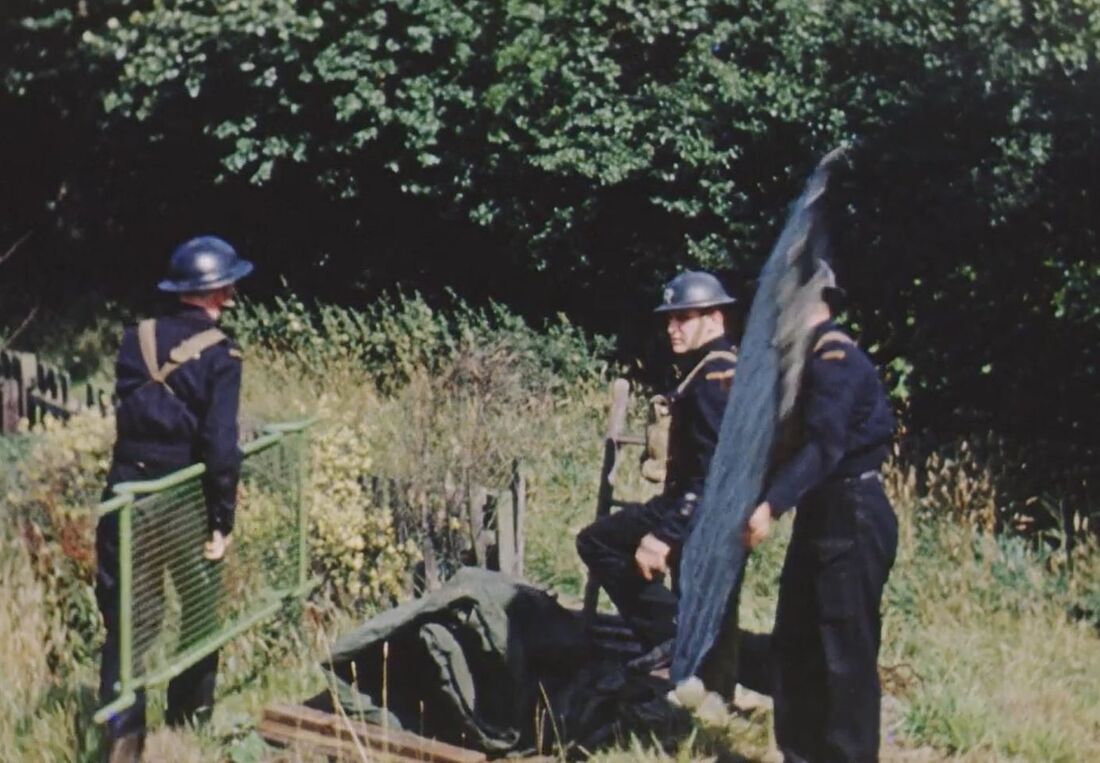
Over 40,000 British civilians were killed by German bombing during the war, with nearly half of them in the capital. As a result, Air Raid Precautions workers were heavily focused in London. Even before the Blitz, Britain made preparations for war. Precious metal that wasn’t used to produce military equipment was turned into all-metal stretchers for ARP, later renamed the Civil Defence Service. Unlike traditional stretchers made of wood poles and canvas, these metal stretchers could be more easily mass produced.
Due to being a large item collection is preferred, but delivery can be arranged at a cost to the buyer.
During the Blitz, these stretchers proved invaluable to the ARP workers who rescued people in the wake of Luftwaffe bombings. Although the wire mesh would have been less comfortable for victims than traditional canvas, the sturdy construction kept them serviceable night after night.
A stretcher repurposed as a section of railing in London (Stretcher Railing Society)
After the war, Britain began the long process of rebuilding. In London, many housing estates lost their metal railings to raw material collections for the war effort. With the war over, thousands of metal stretchers were, thankfully, unneeded. As a quick-fix, London County Council began repurposing these stretchers as metal railings.
Metal fences like these can go completely unnoticed unless you know what you’re looking for (Stretcher Railing Society
The stretchers were installed without any modification, retaining their curved handles which kept them off the ground and made them easier to lift up. Today, these former emergency stretchers can be still be seen in London estates like Peckham, Brixton, and Deptford. Although some of these pieces of history have been removed as they were worn by the elements, the Stretcher Railing Society was formed to catalogue and preserve them for the future.
 WW2 Civil Defence